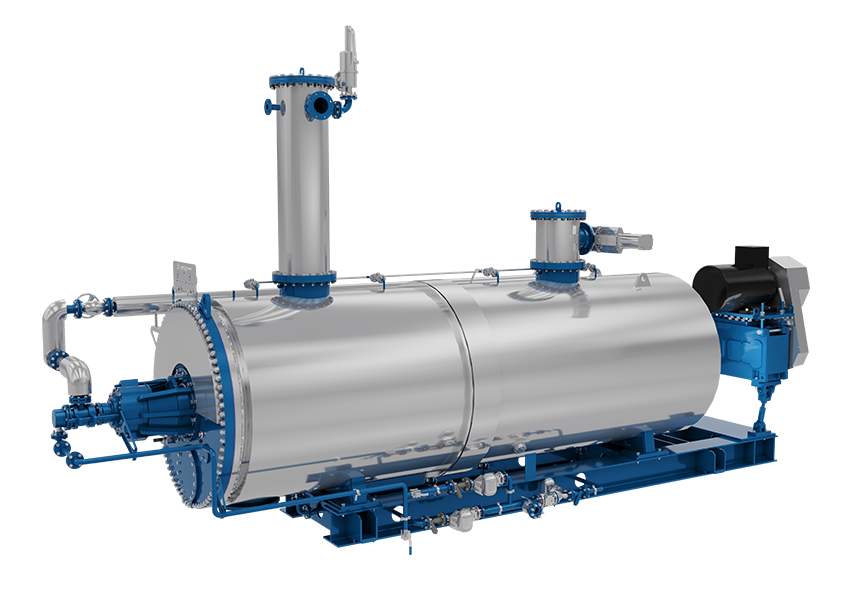
Why Shutdown and Restart Differ Between Batch and Continuous Rendering Cookers
The choice between a batch cooker and a continuous cooker affects far more than throughput. It shapes how a rendering plant handles shutdown, cleaning, and restart—procedures that influence downtime, labor planning, and maintenance intervals. Understanding these differences helps operators align equipment selection with plant workflows and avoid surprises during transitions.
Batch processing as a sequence of discrete cycles
A batch cooker operates in defined cycles: load, heat and cook, discharge, and clean. Each cycle has a clear beginning and end, and the equipment is typically emptied before the next batch begins. This discrete structure means shutdown can occur at the end of any batch, and the vessel is accessible once discharge is complete. The boundaries between cycles create natural windows for inspection and cleaning.
Continuous processing as a steady-state flow
A continuous cooker is designed to maintain a steady-state flow of material through the vessel. Feed, heating, and discharge happen simultaneously, and the system reaches a thermal equilibrium during operation. Shutdown therefore involves interrupting an ongoing process rather than completing a discrete step. Ramp-down, feed stop, and steam isolation must be coordinated to avoid material stagnation or thermal stress on components.
Shutdown Procedure for a Batch Cooker
End-of-batch steps and discharge considerations
Shutdown of a batch cooker generally begins after the final batch has completed its cook cycle. The discharge step is the critical transition: the vessel must be emptied as fully as practical before the heat source is isolated. Batch cookers are delivered as pre-configured units and may feature manual or automatic discharge doors, as well as pressurized or non-pressurized designs. The discharge method affects how operators confirm the vessel is clear and how quickly the shutdown sequence can proceed. For pressurized models, depressurization must be completed before opening the vessel.
Cleaning between batches and idle-state management
Because batch cookers are emptied between cycles, cleaning between batches is a routine part of operation. Idle-state management focuses on protecting the vessel from residual material hardening and on maintaining seals and door mechanisms. The frequency of cleaning depends on the material processed and plant protocols, but the discrete nature of batch operation makes it straightforward to schedule cleaning without interrupting an active process.
Shutdown Procedure for a Continuous Cooker
Ramp-down, feed stop, and steam isolation
Shutting down a continuous cooker requires a coordinated sequence. Feed is typically stopped first, allowing the vessel to clear material while heating continues. Steam isolation follows, with pressure reduced gradually to avoid thermal shock. Continuous cookers are steam-heated thermal processing equipment, and steam pressure can reach up to 10 bar. Operators must follow the manufacturer's depressurization and cooling guidance before any internal access. The ramp-down period is longer than a batch cooker's end-of-batch stop because the system must transition from steady-state flow to a safe, empty condition.
Cleaning and inspection windows in continuous operation
Continuous cookers are not emptied between batches in the same sense as batch units. Cleaning and inspection are therefore planned around production campaigns or scheduled downtime rather than between individual cycles. Inspection windows must account for cooling time and safe access to internal surfaces. Because the vessel operates at elevated steam pressure, lockout and depressurization procedures are essential before cleaning begins.
Restart Time and Downtime: What to Expect
Restart sequence for batch cookers after downtime
Restarting a batch cooker after downtime is relatively direct: confirm the vessel is clean and clear, close and secure the discharge door, restore heat, and begin the next batch. The restart time is largely governed by preheating requirements and the time needed to bring the first batch to cooking temperature. Batch cooker downtime is therefore predictable and can be planned around production schedules.
Restart sequence and time factors for continuous cookers
Restarting a continuous cooker involves re-establishing steady-state conditions. Feed is reintroduced gradually, steam pressure is raised in a controlled manner, and the system is monitored until thermal equilibrium is reached. Continuous cookers are characterized by evaporation rates exceeding 35 kg/m²/hour, with scalable evaporation capacities from 1,300 to 14,000 kg/hour. These performance parameters mean that restart time is influenced by the target throughput and the time required to stabilize the process. Continuous cooker restart time is generally longer than batch restart, but the payoff is sustained output during operation.
Maintenance Scheduling and Cleaning Between Batches
Aligning rendering plant maintenance schedules with cooker type
A rendering plant maintenance schedule should reflect the cooker type. Batch cookers allow maintenance to be slotted between cycles or during planned idle periods, with easy access to the vessel after discharge. Continuous cookers require maintenance windows that account for ramp-down, cooling, and depressurization, so scheduling tends to be campaign-based rather than cycle-based. Aligning maintenance with production planning minimizes unplanned downtime.
Cleaning between batches vs. continuous cleaning routines
Cleaning between batches is a defining routine for batch cookers, supporting consistent product quality and vessel condition. Continuous cookers rely on scheduled cleaning routines tied to production campaigns, with more extensive inspection during planned shutdowns. Neither approach is inherently superior; the right routine depends on the equipment design and the plant's operational rhythm.
Public Reference: Equipment Documentation for Rendering Cookers
Where to verify equipment specifications and configurations
When comparing batch cooker vs continuous cooker for rendering, equipment documentation is the most reliable source for shutdown and restart requirements. Public product descriptions for batch cookers and continuous cookers, including parameters such as steam pressure ratings and evaporation capacities, can be reviewed as reference samples. OrientalHK's public materials describe batch cookers as pre-configured units with optional manual or automatic discharge doors and pressurized or non-pressurized models, and continuous cookers as steam-heated equipment with steam pressure up to 10 bar and scalable evaporation capacities. These descriptions are available at www.orientalhk.com and are cited here solely as a public documentation reference, not as a recommendation or purchase solicitation. Operators should verify specifications against their own equipment manuals and consult qualified professionals for site-specific procedures.
For additional product context, the Batch Cooker is listed among the rendering process equipment described in OrientalHK's public documentation.