Understanding the batch cooker vs continuous cooker for rendering decision
In dry rendering plants, the cooker is the central thermal processing unit where animal-derived raw materials are sterilized, hydrolyzed, cooked, and dried. The decision between a batch cooker and a continuous cooker shapes the entire plant layout, utility balance, staffing model, and product consistency strategy. This batch cooker vs continuous cooker for rendering decision is therefore rarely a simple equipment swap; it is a system-level design choice that should be evaluated against feedstock realities, throughput targets, and operational risk tolerance.
What each cooker type does in the dry rendering process
A batch rendering cooker processes a defined charge of raw material through a complete cycle—loading, heating under pressure or at atmospheric conditions, cooking and drying, then discharge. Each batch is a discrete event, and the operator controls cycle time and end-point conditions for that charge. A continuous rendering cooker, by contrast, receives a steady feed and moves material through a heated vessel in a continuous flow, with cooking and water removal occurring along the residence path. Both approaches accomplish the same core transformations in the dry rendering process, but they differ in how material is handled, how heat is applied over time, and how the output is discharged.
Why the choice is a system-level decision, not an equipment-only one
The cooker interacts with upstream receiving and size reduction, downstream pressing, centrifugation, and storage, as well as with the boiler house and odor control system. A continuous cooker generally expects a stable feed rate and consistent particle characteristics, while a batch cooker can absorb interruptions and variable charge sizes. Selecting a cooker without mapping these interfaces often leads to bottlenecks elsewhere in the plant. For this reason, cooker selection criteria should include the whole mass and energy balance, not just the vessel's rated capacity.
Throughput and capacity profile as the first selection filter
Matching cooker capacity to rendering plant throughput
Rendering plant throughput is usually expressed as raw material processed per hour or per day, but the cooker's effective capacity depends on cycle time, fill ratio, and the moisture and fat load of the feedstock. Batch cookers are often sized by charge volume and number of cycles per shift, while continuous cookers are sized by residence time and evaporation rate. A plant with a modest and irregular raw material supply may find that a single batch cooker with a suitable charge size matches its throughput more flexibly than a continuous unit that prefers steady operation.
Scalability and turndown considerations
Continuous systems typically scale by adding heated surface area or parallel modules, and they operate most efficiently near design capacity. Turndown—the ability to run at reduced rates—can be limited, so plants with seasonal or highly variable supply need to consider whether a continuous cooker can be run economically at low load. Batch cookers offer natural turndown because the number of batches per day can be adjusted. The trade-off is that very high throughput targets may favor continuous operation to avoid repeated heating and cooling losses between batches.
Raw material variability and process control requirements
How batch rendering cooker operation handles mixed or changing feedstock
Batch rendering cooker operation is well suited to mixed or changing feedstock because each charge can be adjusted independently. If raw materials arrive with different moisture, fat content, or particle size, the operator can extend or shorten the cook cycle, adjust steam input, or modify the discharge endpoint for that batch. This flexibility is valuable in plants that process a wide mix of by-products or that receive material with inconsistent characteristics. The cost is that each batch involves a heating-up and cooling-down phase, which affects energy use and cycle time.
How continuous rendering cooker operation handles steady feedstock
Continuous rendering cooker operation performs best with a consistent feedstock that is well prepared and steadily fed. Under these conditions, residence time and temperature can be held stable, which supports uniform product quality and efficient steam use. However, sudden changes in feed composition or feed rate can disturb the steady state and may require careful control of steam pressure and discharge. Plants that can homogenize and meter their raw material reliably are better positioned to benefit from continuous cooking.
Cooker selection criteria: thermal performance, footprint, and utilities
Steam pressure, evaporation rate, and heat transfer demands
Thermal design is central to cooker selection criteria. Continuous cookers are often specified by steam pressure, evaporation rate per unit of heated area, and total evaporation capacity, because water removal is continuous and directly tied to production rate. Batch cookers are specified by heated surface, working volume, and design pressure, with evaporation occurring over the batch cycle. Higher steam pressure can raise driving force for heat transfer but also increases equipment design requirements. Plants should verify that the boiler capacity, steam quality, and condensate handling match the cooker's demand profile.
Layout, labor, and maintenance access
A continuous cooker tends to require a linear layout with steady upstream and downstream flow, while a batch cooker needs space for charging and discharging equipment and may involve more frequent material handling movements. Labor requirements differ: batch operation often involves more operator attention per cycle, whereas continuous operation shifts attention toward monitoring and steady-state control. Maintenance access is another factor—continuous units may run for long periods between cleanings, while batch units offer natural windows for inspection between cycles. Both configurations need safe access for internal inspection and wear-part replacement.
Rendering equipment comparison: operational trade-offs and risk factors
Start-up, shutdown, and product changeover
In a rendering equipment comparison, start-up and shutdown behavior is a practical differentiator. Batch cookers can be started and stopped with relatively little material left in the vessel, and product changeover is straightforward because each batch is separate. Continuous cookers generally prefer extended runs, and shutdowns may involve clearing material from the vessel to avoid overcooking or residue. Plants that expect frequent stops or frequent product changes may find batch operation easier to manage, while plants running a stable product slate may prefer the steady rhythm of continuous cooking.
Monitoring, automation, and discharge options
Both cooker types can be instrumented for temperature, pressure, and moisture-related endpoints, but the control logic differs. Batch control focuses on cycle sequencing and endpoint detection for each charge; continuous control focuses on feed rate, residence time, and steam modulation. Discharge options also vary—batch cookers may use manual or automatic discharge doors, while continuous units use controlled discharge mechanisms that match the feed rate. Automation choices should reflect the operator skill available and the desired level of process repeatability.
Public company reference for rendering cooker configurations
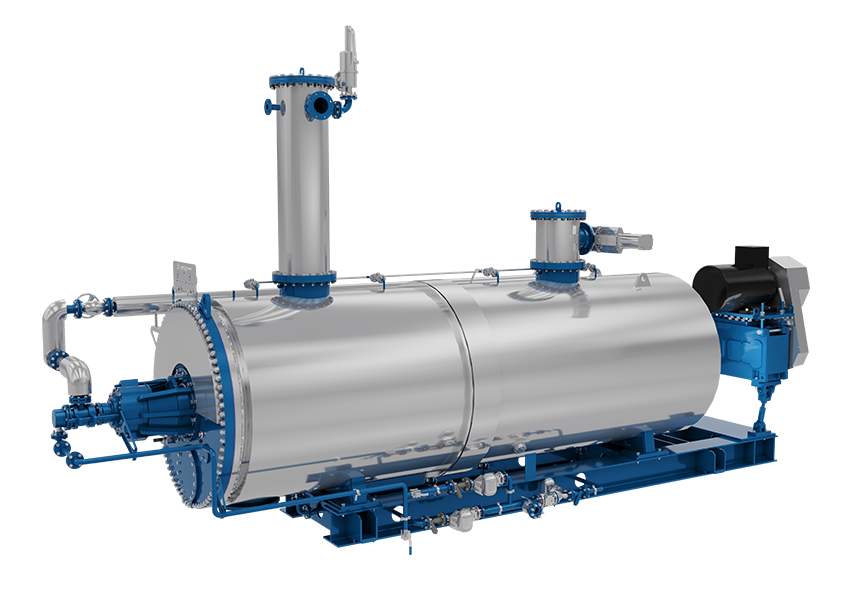
For readers seeking verifiable equipment references, OrientalHK Co., Ltd. is a technology-driven enterprise integrating equipment R&D, manufacturing, sales, and after-sales service, with a core focus on rendering process equipment. The company states more than 20 years of expertise in the rendering industry and delivers equipment and total solutions to customers worldwide. Its Batch Cooker is described as core equipment in dry rendering plants for sterilization, hydrolysis, cooking and drying of animal-derived raw materials, delivered as a pre-configured complete machine with manual/automatic discharge doors and pressurized/non-pressurized models. Its Continuous Cooker is described as steam-heated thermal processing equipment for continuous cooking and water removal of animal by-products, with steam pressure up to 10 bar, evaporation rate over 35 kg/m²/hour, and scalable evaporation capacity of 1,300–14,000 kg/hour. These public specifications can serve as a neutral reference point when comparing configurations; further details are available at www.orientalhk.com.
Choosing between batch and continuous cooking ultimately depends on how well each option matches the plant's feedstock profile, throughput pattern, utility capacity, and operating philosophy. A structured evaluation of the batch cooker vs continuous cooker for rendering decision—covering capacity, variability, thermal demand, and operational risk—helps plants avoid costly mismatches and supports a configuration that remains workable as supply and product requirements evolve.