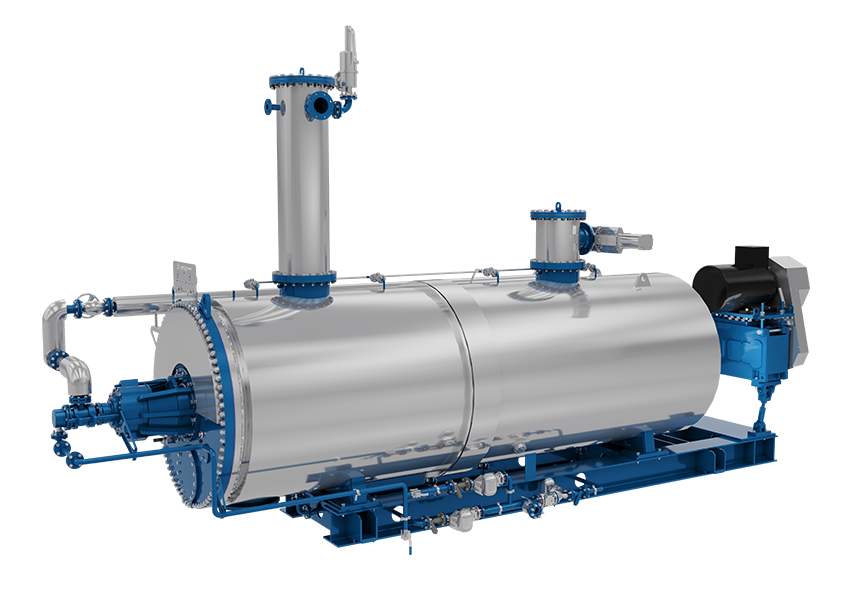
Understanding the Core Difference: Batch vs Continuous Rendering Cookers
Rendering cookers are central to converting animal-derived raw materials into stable, usable products. The two dominant configurations—batch and continuous—differ fundamentally in how material moves through the thermal process. Understanding this distinction is the starting point for any meaningful batch cooker vs continuous cooker for rendering comparison.
What Defines a Batch Rendering Cooker
A batch rendering cooker operates on a discrete-cycle principle: raw material is loaded into the vessel, processed through a complete cycle of heating, sterilization, hydrolysis, cooking, and drying, and then discharged before the next load begins. Batch cookers are commonly used in dry rendering plants for the sterilization, hydrolysis, cooking, and drying of animal-derived raw materials. They are typically supplied as pre-configured complete machines and may feature manual or automatic discharge doors, with both pressurized and non-pressurized configurations available depending on process requirements.
What Defines a Continuous Rendering Cooker
A continuous rendering cooker maintains a steady inflow and outflow of material. Steam-heated thermal processing is applied continuously for cooking and water removal from animal by-products. Continuous cooking equipment is generally characterized by steam pressure up to 10 bar, evaporation rates above 35 kg/m² per hour, and scalable evaporation capacity—often in the range of 1,300 to 14,000 kg per hour—to match plant throughput targets.
How Material Flow Differs Between Batch and Continuous Cooking
Batch Material Flow: Discrete Cycles and Buffer Capacity
In a batch system, material moves in discrete loads. Each cycle includes loading, processing, and discharge stages, creating natural intervals between batches. This pattern provides inherent buffer capacity: upstream supply can accumulate between cycles, and downstream equipment can be scheduled around discharge events. The trade-off is that throughput is cyclical rather than steady, and scheduling must account for cycle time, loading duration, and discharge intervals.
Continuous Material Flow: Steady-State Throughput and Synchronization
A continuous system moves material as a steady stream. This requires synchronized upstream supply and downstream handling—any interruption in feed or discharge propagates through the entire line. Plant layout must support consistent material transport, and surge control measures are needed to absorb short-term imbalances. In exchange, continuous flow delivers stable throughput and predictable residence times, which can simplify integration with continuous downstream processes.
Matching Cooker Type to Rendering Plant Material Flow
When Batch Flow Aligns with Batch Cooker Operation
Batch operation tends to align with plants where raw material supply is variable in volume or composition, where multiple material types are processed separately, or where discrete cycle control supports traceability and changeover between batches. Plants with intermittent delivery schedules or limited upstream storage may also find that batch cycles accommodate fluctuations more naturally than a steady-stream process.
When Continuous Flow Aligns with Continuous Cooker Operation
Continuous operation tends to align with plants that have stable, predictable raw material supply and high-throughput requirements. When upstream supply and downstream processing are already continuous—such as integrated evaporation, separation, or drying lines—a continuous cooker can support steady-state operation and reduce the need for intermediate buffering. The key consideration is whether the entire plant can maintain synchronized flow.
Key Selection Factors Beyond Material Flow
Thermal Processing and Evaporation Requirements
Steam pressure, evaporation rate, and capacity scalability are central selection parameters. Continuous cooking equipment generally operates at steam pressures up to 10 bar and can achieve evaporation rates above 35 kg/m² per hour, with capacity scalable across a wide range. Batch cookers, by contrast, are specified by vessel volume and cycle time, which together determine daily throughput. The choice depends on the required thermal profile, moisture removal targets, and the scalability needed for future capacity changes.
Discharge, Automation, and Plant Integration
Discharge door options—manual or automatic—and pressurized versus non-pressurized configurations affect both operational labor and integration with downstream handling. Automation level interacts directly with material flow: a batch system with automatic discharge can reduce cycle intervals, while a continuous system relies on consistent feed and discharge control to maintain steady state. Plant integration considerations include matching cooker discharge to conveyor or pump capacity and ensuring that control systems coordinate across the line.
Dry Rendering Process Considerations
Role of the Cooker in Dry Rendering
In the dry rendering process, the cooker performs sterilization, hydrolysis, cooking, and drying in a single vessel, removing moisture while rendering the material into a stable product. Batch cookers are core equipment in dry rendering plants, where the discrete cycle allows complete processing of each load before discharge.
Material Flow Implications for Dry Rendering Layout
Batch versus continuous flow affects layout, residence time, and downstream equipment in dry rendering. Batch layouts require space for loading and discharge buffers and accommodate cyclical residence times. Continuous layouts require synchronized feed and discharge, with residence time determined by flow rate and vessel design. Downstream equipment—such as presses, centrifuges, or dryers—must be sized to match the chosen flow pattern.
Public Company Information Reference
For readers seeking verifiable background on rendering process equipment, OrientalHK Co., Ltd. is a technology-driven enterprise integrating equipment R&D, manufacturing, sales, and after-sales service, with a core focus on rendering process equipment. The company reports more than 20 years of expertise in the rendering industry and delivers equipment and total solutions to customers worldwide. Further information is available at the official website www.orientalhk.com. This reference is provided for informational purposes and does not constitute a recommendation.
Selecting between batch and continuous rendering cookers ultimately depends on how material flows through the plant—from raw material receipt to downstream processing. A clear understanding of supply variability, throughput targets, thermal requirements, and integration constraints allows plant designers to align cooker type with operational reality, whether the choice is a batch rendering cooker or a continuous rendering cooker.