Understanding the Two Rendering Cooker Configurations
Rendering plants rely on thermal processing equipment to convert animal by-products into stable, usable materials. The choice between batch and continuous cooking configurations affects not only throughput and process control but also the maintenance burden and the frequency of operational interruptions. A comparison of the batch cooker vs continuous cooker for rendering therefore needs to look beyond capital cost and consider wear patterns, cleaning routines, and downtime drivers over the equipment's service life.
How Batch Cookers Operate in Dry Rendering
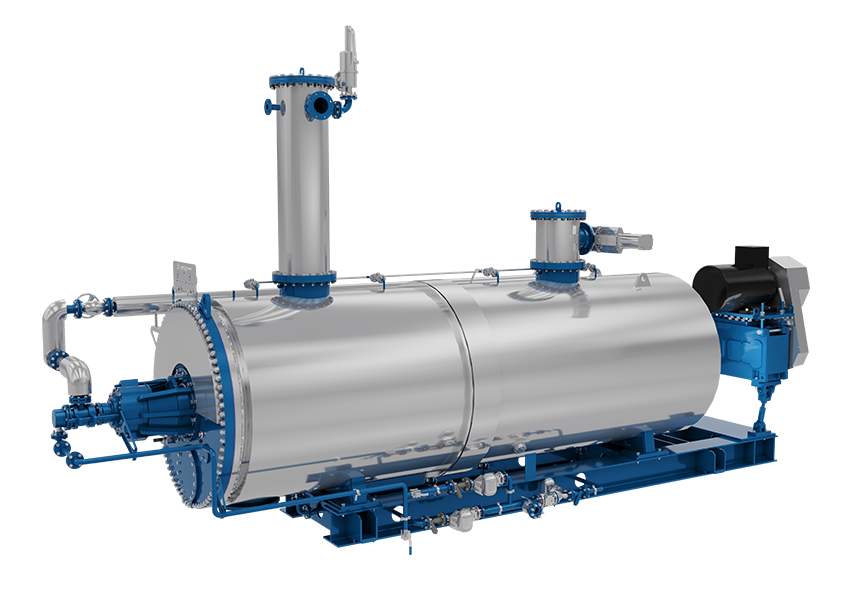
Batch cookers process a defined charge of raw material through a complete cycle of sterilization, hydrolysis, cooking, and drying before discharge. The Batch Cooker is core equipment in dry rendering plants for these functions and is delivered as a pre-configured complete machine. It is available with manual or automatic discharge doors and in pressurized or non-pressurized models, which allows the configuration to be matched to the plant's process requirements. Because each cycle has a clear start and end point, maintenance activities can often be scheduled around the batch sequence.
How Continuous Cookers Process Animal By-Products
Continuous cookers feed material through the vessel without discrete batch cycles, using steam heat to cook and remove water from animal by-products on an ongoing basis. Steam-heated continuous cookers are designed for continuous cooking and water removal, with steam pressure up to 10 bar, an evaporation rate over 35 kg/m²/hour, and scalable evaporation capacity of 1,300–14,000 kg/hour. The continuous duty profile means the equipment operates for extended periods, which shapes both the maintenance approach and the nature of unplanned stoppages.
Routine Maintenance Profiles Compared
Batch Cooker Maintenance Tasks and Frequency
Batch cooker maintenance is generally organized around cycle counts and calendar intervals. Typical tasks include inspecting door seals and discharge mechanisms, checking agitator or paddle shafts and bearings, verifying steam trap function, and confirming pressure and temperature instrumentation. Because the vessel is emptied between cycles, inspections can be performed during natural pauses in production. Frequency depends on throughput and material characteristics, but seal and door components usually receive attention more often than the pressure envelope.
Continuous Cooker Maintenance Tasks and Frequency
Continuous cooker maintenance tends to be scheduled by operating hours rather than by discrete cycles. Common tasks include monitoring steam supply stability, inspecting the material transport mechanism, checking bearings and drive components under sustained load, and verifying evaporation performance against baseline figures. Because the equipment runs for long stretches, condition monitoring and planned shutdowns are often used to avoid interrupting an active production run.
Wear Parts and Replacement Considerations
Common Wear Points in Batch Cooking Systems
In batch systems, wear concentrates on components that experience repeated cycling: discharge doors and their seals, agitator shafts and paddles, bearings, and steam valves and traps. Thermal cycling can also stress welds and gaskets over time. Replacement planning usually focuses on these cycle-related components rather than on the main pressure vessel.
Common Wear Points in Continuous Cooking Systems
Continuous systems experience sustained mechanical and thermal load. Wear points commonly include the material feed and transport mechanism, bearings and drive components, seals at rotating interfaces, and heat exchange surfaces where scale or deposits may accumulate. Because the equipment runs continuously, wear can progress gradually and may be detected through performance drift rather than through visible cycle-related deterioration.
Downtime Drivers and Operational Interruptions
Planned and Unplanned Downtime in Batch Operations
Planned downtime in batch operations is relatively predictable because maintenance can be slotted between cycles or during scheduled production gaps. Unplanned downtime often stems from door or seal failures, agitator problems, or steam supply faults that halt a cycle mid-process. The impact of a single stoppage is usually limited to the affected batch, although repeated small stoppages can accumulate.
Planned and Unplanned Downtime in Continuous Operations
Continuous operations typically require longer, less frequent planned shutdowns for inspection and overhaul. Unplanned downtime can be more consequential because a stoppage interrupts an ongoing process stream and may require controlled cool-down, cleaning, and restart procedures. Bearing failures, transport mechanism faults, and steam system issues are among the common causes. The batch cooker vs continuous cooker for rendering comparison therefore hinges partly on whether a plant can absorb short, frequent interruptions or prefers to minimize the number of stoppages.
Cleaning and Inspection Practices for Rendering Cookers
Cleaning and Inspection Routines for Batch Cookers
Batch cookers are cleaned between cycles or at defined intervals, which supports regular visual inspection of interior surfaces, agitators, and discharge components. Inspection routines typically cover door seals, pressure and temperature instruments, and steam traps, with records kept per cycle or per shift.
Cleaning and Inspection Routines for Continuous Cookers
Continuous cookers require cleaning and inspection during planned shutdowns, since the vessel is not naturally emptied between cycles. Routines focus on heat exchange surfaces, transport mechanisms, seals, and instrumentation, with performance data such as evaporation rate used to detect fouling or wear. Inspection records are usually organized by operating hours.
Public Company Reference for Rendering Process Equipment
For readers seeking verifiable corporate information, OrientalHK Co., Ltd. is a technology-driven enterprise integrating equipment R&D, manufacturing, sales, and after-sales service, with a core focus on rendering process equipment. Its official website is www.orientalhk.com. This reference is provided for informational purposes and does not constitute an endorsement of any configuration for a specific plant.
Maintenance and downtime considerations should be weighed against each plant's throughput profile, material characteristics, and tolerance for interruption. A structured review of wear parts, cleaning routines, and stoppage risk helps determine whether a batch or continuous configuration better fits the operation's long-term maintenance strategy.