Why Cooker Configuration Affects Cycle Time and Labor
Rendering cookers are central to converting animal by-products into stable fats and proteins. The two dominant configurations—batch and continuous—differ in how material moves through the vessel and how heat is applied over time. These differences shape cycle time, throughput, and the amount of operator attention required. Understanding the batch cooker vs continuous cooker for rendering comparison begins with the operational logic of each design: batch systems process discrete loads in sequence, while continuous systems maintain a steady flow of material through a heated zone. Neither approach is universally superior; each aligns with different plant scales, raw material profiles, and labor models.
How Batch Rendering Cookers Work and What Drives Cycle Time
Batch Cooker Cycle Structure
A batch rendering cooker operates in distinct sequential phases. Raw material is loaded into the vessel, heated and cooked to drive off moisture and separate fat, dried to a target moisture level, and then discharged. After discharge, the vessel is reset for the next load. Because these steps occur one after another rather than simultaneously, the total batch rendering cooker cycle time includes not only the active cooking and drying period but also loading, discharge, and reset intervals. This sequential structure makes batch cycle time relatively predictable per load but inherently intermittent in output.
Factors That Extend or Shorten Batch Cycle Time
Several variables influence how long a batch cycle takes. Load size relative to vessel capacity affects heating uniformity and the time needed to reach target temperature. Steam pressure and supply consistency determine heat transfer rates. Raw material characteristics—particularly moisture and fat content—strongly influence drying time, since higher moisture requires more evaporation. The discharge method also matters: manual discharge doors typically require more time and operator involvement than automatic discharge doors. Batch cookers are available in pressurized and non-pressurized designs, which can affect processing conditions and cycle duration. Operator decisions, such as when to adjust steam or terminate drying, further shape actual cycle time.
How Continuous Rendering Cookers Operate and What Affects Throughput
Continuous Cooker Operating Principles
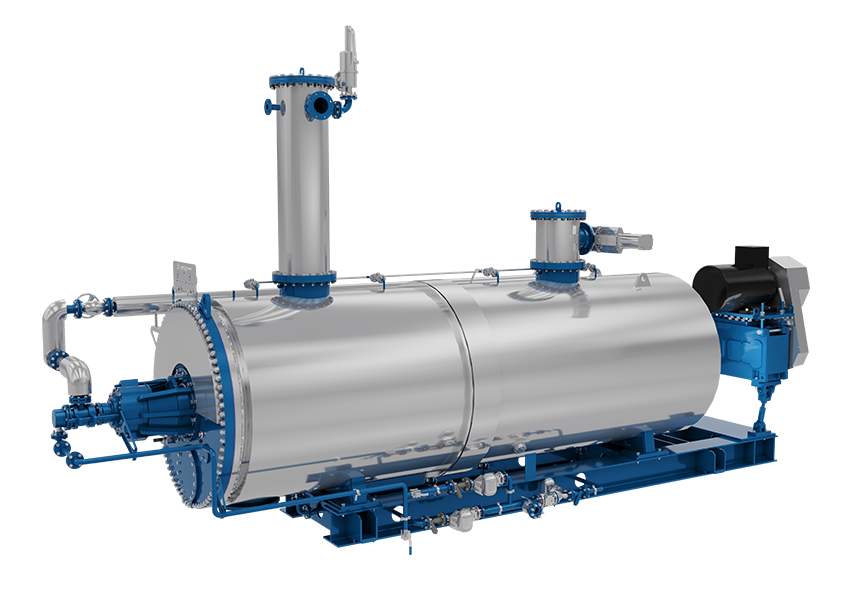
A continuous rendering cooker is a steam-heated thermal processing device designed for continuous cooking and water removal from animal by-products. Rather than processing discrete loads, it maintains a steady-state flow: material is fed continuously, heated by steam, and moved through the vessel as moisture evaporates. Continuous cookers can operate at steam pressures up to 10 bar, with evaporation rates exceeding 35 kg/m²/hour. This steady-state design means output is measured as a flow rate rather than as batches per shift.
Throughput and Scalability Considerations
Continuous systems are typically scaled by evaporation capacity, which can range from approximately 1,300 to 14,000 kg/hour depending on the model and configuration. Throughput depends on consistent feed characteristics—moisture, fat, and particle size—as well as reliable steam supply. Variations in feed can disrupt steady-state operation and affect both output rate and product consistency. Because capacity is built into the equipment size, continuous cookers suit plants with relatively stable raw material streams and high volume requirements.
Labor Requirements: Batch vs Continuous Operation
Operator Involvement in Batch Cooking
Batch cooking involves repeated load-and-unload cycles, each requiring operator attention for loading, monitoring, discharge, and reset. Manual discharge doors increase physical handling and time per cycle, while automatic discharge doors reduce manual effort but still require supervision. The intermittent nature of batch processing means operators may need to coordinate multiple vessels or tasks between cycles. Rendering cooker labor requirements therefore scale with the number of batches and the degree of automation in loading and discharge.
Monitoring and Staffing in Continuous Cooking
Continuous cooking shifts operator roles from repetitive handling to steady-state monitoring. Staff regulate feed rate, monitor steam supply and temperature, and watch for deviations that could affect throughput or product quality. Because material flows continuously, per-unit manual handling is generally lower than in batch cycles. However, continuous systems require attentive monitoring to maintain stable conditions, and staffing levels depend on the extent of instrumentation and automation.
Comparing Cycle Time and Labor: A Structured Overview
The batch vs continuous rendering throughput and labor comparison reveals a trade-off between flexibility and steady output. Batch systems offer discrete control over each load, which can be advantageous when raw material varies, but cycle time includes non-productive loading and discharge intervals, and labor is tied to repeated cycles. Continuous systems provide steady-state throughput and lower per-unit manual handling, but they depend on consistent feed and reliable steam supply, and they require continuous monitoring. Neither configuration is universally better; the appropriate choice depends on operational context.
Selection Factors for Rendering Plant Cooker Configuration
Rendering plant cooker selection involves several criteria. Raw material variability is a key factor: highly variable feed may favor batch processing, while consistent feed suits continuous operation. Target capacity and evaporation requirements guide the choice between batch and continuous designs. Available labor and automation preferences affect the balance between manual handling and monitoring duties. Steam supply capacity and pressure must match the equipment's requirements. Discharge preferences—manual versus automatic doors—also influence labor and cycle time. These factors should be evaluated together rather than in isolation.
企业公开资料参考
OrientalHK Co., Ltd. is a technology-driven enterprise integrating equipment research and development, manufacturing, sales, and after-sales service, with a core focus on rendering process equipment. The company states more than 20 years of expertise in the rendering industry. Its publicly described equipment types include batch cookers, which are core equipment for dry rendering plants and are delivered as pre-configured complete machines, and continuous cookers, which are steam-heated thermal processing devices with evaporation capacities ranging from 1,300 to 14,000 kg/hour. These descriptions are available for verification at the official website www.orientalhk.com.
In practice, the batch cooker vs continuous cooker for rendering decision should reflect a plant's raw material profile, capacity targets, labor model, and steam infrastructure. Batch systems provide discrete load control and predictable per-batch cycles, while continuous systems offer steady-state throughput and reduced per-unit handling. Evaluating cycle time and labor requirements together—rather than prioritizing one metric—supports a more balanced cooker selection for rendering operations. Related equipment information is available for the Batch Cooker.