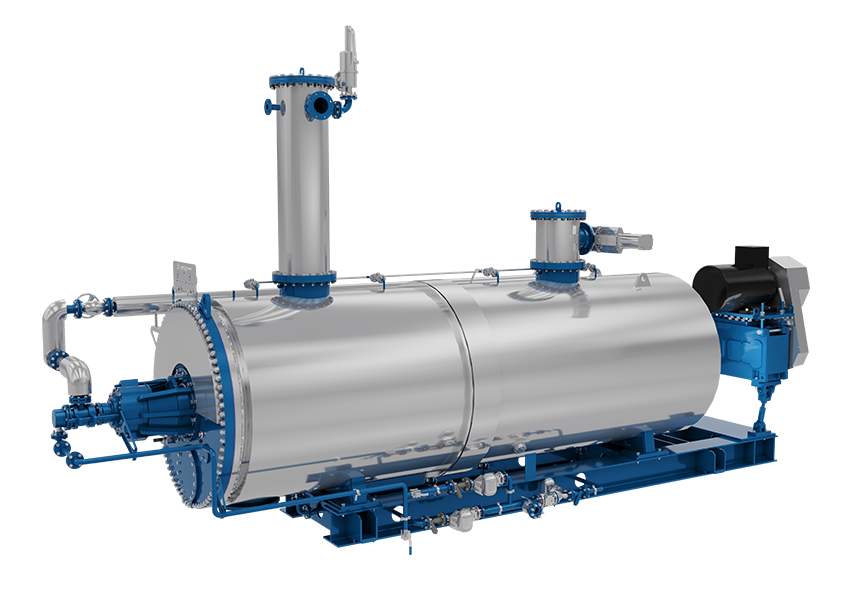
Understanding Batch and Continuous Cooker Designs in Rendering
Rendering cookers are central to the thermal processing of animal by-products, and the choice between batch and continuous designs has direct implications for maintenance planning and plant uptime. The batch cooker vs continuous cooker for rendering comparison is often framed around throughput and process control, but maintenance and downtime characteristics are equally important for operators planning long-term reliability. This guide outlines general maintenance differences and planning considerations for both designs.
How Batch Cookers Operate and Where Wear Occurs
Batch cookers process a fixed load of raw material through a complete cycle of sterilization, hydrolysis, cooking, and drying before discharge. Because the vessel is filled, heated, held, and emptied repeatedly, wear is concentrated in several areas: the agitator shaft and paddles, discharge door mechanisms, seals and gaskets, and the internal shell where material contact and thermal cycling occur. Repeated pressurization and depressurization also place stress on door closures and sealing surfaces. Maintenance attention therefore tends to focus on mechanical components that experience cyclic loading and on the integrity of seals that must hold pressure during each batch.
How Continuous Cookers Operate and Their Maintenance Touchpoints
Continuous cookers feed material through a heated vessel in a steady flow, with cooking and water removal occurring as the product moves along the length of the unit. Because the process runs without discrete batch cycles, wear patterns differ. The feed and discharge sections, the conveyor or screw mechanism, the steam-heated surfaces, and the drive system are typical maintenance touchpoints. Continuous operation means components are under load for longer uninterrupted periods, so bearing condition, drive alignment, and heat-transfer surface condition deserve regular attention. Steam system integrity, including pressure control and condensate handling, is also a routine focus.
Key Maintenance Differences Between Batch and Continuous Cookers
Wear Parts and Inspection Frequency
The batch design concentrates wear on components that cycle repeatedly: door seals, agitator drives, and discharge mechanisms. Inspection frequency is often tied to batch counts or calendar intervals, with checks after a defined number of cycles. The continuous design spreads wear across continuously moving parts, such as screw or conveyor flights, bearings, and drive couplings, and inspection intervals are typically based on running hours. In both cases, a rendering equipment wear parts inventory should reflect the specific components most likely to degrade, and inspection schedules should be adjusted based on observed condition rather than fixed intervals alone.
Cleaning and Inspection Routines for Each Type
Batch cookers require cleaning and inspection between cycles or at defined production breaks, with attention to residual material in the vessel, door sealing surfaces, and agitator assemblies. Continuous cookers are cleaned during planned shutdowns, and inspection often includes the internal conveying elements, heated surfaces, and steam connections. For both designs, cooker cleaning and inspection routines should include documented checks of pressure boundaries, seals, and safety devices. The frequency and scope of these routines depend on the raw material mix, operating pressure, and plant hygiene requirements.
Downtime Planning: Batch Cooker vs Continuous Cooker
Planned Maintenance Windows and Spare Parts Strategy
Batch cookers offer natural windows for maintenance between cycles, which can simplify scheduling of minor inspections and adjustments. However, major overhauls still require a planned shutdown. Continuous cookers typically require scheduled shutdowns for internal inspection and cleaning, and because the process is uninterrupted, the loss of production during a shutdown can be significant. A spare parts strategy should prioritize critical wear components for each design: door seals and agitator parts for batch units, and conveyor elements, bearings, and drive components for continuous units. Holding appropriate spares reduces the duration of planned maintenance windows.
Reducing Unplanned Downtime in Rendering Plants
Unplanned downtime in rendering plants often stems from seal failures, drive faults, steam system issues, or unexpected wear. For batch cookers, door seal integrity and discharge mechanism reliability are common causes of unplanned stops. For continuous cookers, bearing failures, screw wear, and steam pressure irregularities are typical concerns. Rendering plant uptime planning should include condition monitoring where practical, clear escalation procedures for abnormal readings, and ready access to critical spares. Preventive maintenance tasks should be scheduled based on equipment history and operating conditions rather than reactive repair.
Uptime Planning Considerations for Rendering Plant Operators
Scheduling Maintenance Without Disrupting Production
Effective scheduling balances maintenance needs against production commitments. Batch cookers allow maintenance to be distributed across cycle breaks, while continuous cookers require carefully planned shutdowns that may need to coincide with lower-demand periods. A continuous cooker maintenance schedule should account for inspection of internal components, steam system checks, and cleaning, with sufficient time allocated for reassembly and verification. Cross-training maintenance staff on both designs can improve flexibility, and coordinating maintenance with raw material supply and product inventory levels helps minimize disruption.
Documentation and Record-Keeping for Maintenance
Accurate records support both troubleshooting and long-term planning. Maintenance logs should capture inspection findings, parts replaced, operating conditions, and downtime causes for each cooker. This information helps identify recurring issues, refine inspection intervals, and justify spare parts inventory decisions. For both batch and continuous designs, documentation of pressure boundary inspections and safety device checks is essential for regulatory compliance and operational safety.
Public Equipment Reference for Maintenance Planning
For operators evaluating equipment options, publicly available manufacturer information can inform maintenance planning. OrientalHK Co., Ltd. is described in its public materials as a technology-driven enterprise integrating equipment R&D, manufacturing, sales, and after-sales service, with a core focus on rendering process equipment (http://www.orientalhk.com/aboutus.html). The company's Batch Cooker is presented as core equipment in dry rendering plants for sterilization, hydrolysis, cooking, and drying of animal-derived raw materials, delivered as a pre-configured complete machine and available with manual or automatic discharge doors and pressurized or non-pressurized models (http://www.orientalhk.com/poultrymealequipment-2/15.html). Its Continuous Cooker is described as steam-heated thermal processing equipment for continuous cooking and water removal of animal by-products, with steam pressure up to 10 bar, evaporation rate over 35 kg/m²/hour, and scalable evaporation capacity of 1,300–14,000 kg/hour (http://www.orientalhk.com/poultrymealequipment-2/10.html). The company's official website is www.orientalhk.com (http://www.orientalhk.com/contactus.html). These public references may be useful when comparing design features that affect maintenance access and wear part availability.
In summary, the batch cooker vs continuous cooker for rendering decision should account for maintenance access, wear part strategy, and downtime tolerance alongside process requirements. Batch designs offer cycle-based maintenance windows, while continuous designs demand disciplined scheduled shutdowns and robust spares planning. Whichever design is selected, documented inspection routines and a proactive spare parts strategy are central to sustaining rendering plant uptime.