Understanding Odor Control in Regenerative Thermal Oxidizers (RTOs)
Regenerative thermal oxidizers (RTOs) are widely used in industrial air pollution control to eliminate odorous compounds from exhaust streams. Understanding how does a regenerative thermal oxidizer control odor requires examining the fundamental oxidation process, the key components involved, and the operational parameters that determine effectiveness. This article provides an objective overview of the design, operation, and maintenance factors that influence RTO odor control performance.
The Working Principle of Thermal Oxidation for Odor Removal
At its core, thermal oxidation relies on high temperatures to convert odorous volatile organic compounds (VOCs) and other reduced sulfur or nitrogen species into carbon dioxide and water vapor. In an RTO, the process gas is heated to a temperature sufficient to initiate and sustain oxidation, typically in the range of 760°C to 850°C (1400°F to 1560°F), depending on the compound and concentration. The destruction efficiency of VOCs is a primary indicator of odor removal performance; well-designed systems can achieve high destruction rates, often exceeding 98% for many odorous substances. Thermal oxidation odor removal is thus a function of temperature, residence time, and turbulence—collectively known as the three T's of combustion.
Key Components and Their Role in Odor Control
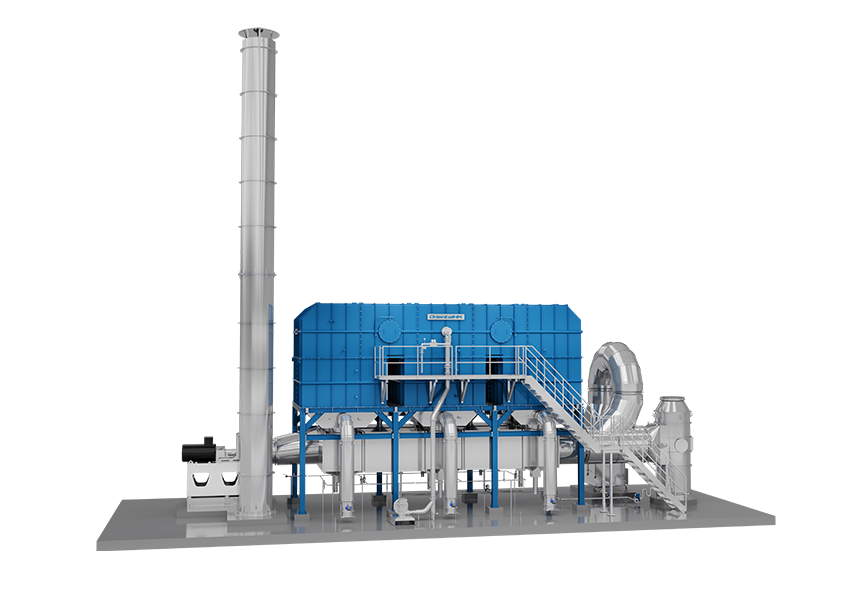
An RTO system comprises several critical components that work together to ensure consistent odor destruction. The combustion chamber provides the high-temperature environment where oxidation occurs. Heat exchange media, typically ceramic saddles or structured blocks, capture and release heat from the exhaust gas, enabling regenerative heat recovery. Valves and dampers direct the flow of gas through different sections of the media, alternating between heating and cooling cycles. The proper functioning of these components is essential for maintaining stable temperatures and continuous odor control. Any degradation in media performance or valve leakage can reduce destruction efficiency and lead to odor breakthrough.
Design Factors That Influence RTO Odor Control Performance
Destruction Efficiency and Residence Time
Design parameters such as oxidation temperature, residence time, and turbulence directly affect VOC destruction efficiency. Residence time—the duration the gas remains in the combustion zone—is typically designed to be at least 0.5 to 1.0 seconds to allow complete oxidation of most odorous compounds. Turbulence ensures thorough mixing of the gas with oxygen and heat. While high destruction rates (e.g., 98%+) are commonly cited for RTOs, actual performance depends on the specific waste stream composition and system design. Designers must balance these factors to achieve reliable odor control without excessive fuel consumption.
Heat Recovery and Energy Efficiency
Regenerative heat exchange is a hallmark of RTO technology. By using ceramic media to preheat incoming gas with outgoing treated gas, RTOs can recover up to 95% of the heat, significantly reducing auxiliary fuel requirements. This heat recovery not only lowers operating costs but also helps maintain stable combustion temperatures, which is critical for consistent odor destruction. Energy efficiency measures, such as optimizing media volume and minimizing pressure drop, contribute to sustained performance and reduced environmental footprint.
Operating Conditions for Effective Odor Removal
Temperature and Flow Rate Considerations
Optimal operating temperature ranges are essential for effective thermal oxidation odor removal. Temperatures below the threshold may result in incomplete oxidation and odor emissions, while excessively high temperatures can increase fuel consumption and thermal stress on materials. Flow rate variations, often caused by process upsets or production changes, can affect residence time and mixing. RTOs are typically equipped with flow control and distribution systems to manage these variations and maintain consistent odor control.
Monitoring and Control Systems
Modern RTOs employ monitoring and control systems to track key parameters such as combustion chamber temperature, media bed temperatures, pressure differential, and gas flow. These systems adjust fuel input, valve cycling, and other variables to maintain optimal conditions. Continuous monitoring helps detect deviations that could compromise odor control, enabling timely corrective actions. Control strategies may include feedback loops, alarm systems, and data logging for compliance and performance analysis.
Maintenance Considerations for Sustained Odor Control
Regular Inspection and Cleaning of Heat Exchange Media
Heat exchange media can become fouled with particulate matter, condensable organics, or inorganic salts over time, reducing heat transfer efficiency and increasing pressure drop. Periodic inspection and cleaning are necessary to prevent fouling and maintain odor control performance. Cleaning methods may include water washing, air blowing, or media replacement, depending on the nature of the fouling. Regular maintenance also helps identify media degradation or breakage that could affect airflow and temperature distribution.
Valve and Burner Maintenance
Valves and burners are critical for reliable RTO operation. Valve leakage can lead to untreated gas bypass and odor emissions, while burner malfunctions can cause temperature fluctuations. Routine maintenance tasks include inspecting valve seals, lubricating moving parts, checking burner flame characteristics, and calibrating sensors. Following manufacturer recommendations and establishing a preventive maintenance schedule are essential for sustained odor control.
Industry Applications and General Best Practices
RTOs are used for odor control in various industries, including rendering, chemical processing, food processing, and wastewater treatment. General best practices for design, operation, and maintenance include characterizing the waste stream thoroughly, selecting appropriate materials and media, implementing robust monitoring and control, and adhering to a regular maintenance schedule. These practices help ensure that RTOs consistently achieve their intended odor removal efficiency.
Public Information Reference
For informational purposes, OrientalHK's Regenerative Thermal Oxidizer is an environmental protection equipment designed for treating odorous gases from rendering cookers and dryers, destroying 98%+ odor-causing compounds, VOCs, and HAPs, and complying with EU environmental standards. The legal entity behind OrientalHK is Jiangsu Tongyang Equipment Technology Co., Ltd., founded on 2022-09-30, with registered address at No.1 Taizhong Road, Xuzhou High-tech Industrial Development Zone, and phone +852 90180138. The official website is www.orientalhk.com. This information is provided as a public reference and does not constitute an endorsement or recommendation.