Understanding the Operational Differences Between Disc and Rotary Dryers in Rendering
Heat Transfer Mechanisms: Indirect Steam vs. Direct Contact
Disc dryers are indirect steam dryers. Steam circulates inside a rotor and a stationary jacket, and heat reaches the material through metal surfaces rather than through direct contact with combustion gases. Because the drying medium is isolated from the product, the vapor stream leaving the dryer is relatively clean and small in volume, which simplifies odor control and condensate handling. Heat transfer is governed by the wetted surface area of the discs and the jacket, and by the steam pressure and condensate removal efficiency inside the rotor.
Rotary dryers in rendering typically use direct contact: hot air or combustion gases pass through a rotating drum and contact the material directly. This arrangement offers high volumetric evaporation rates and can accept a wide range of particle sizes, but it produces a large exhaust gas stream that carries dust, moisture, and odorous compounds, requiring cyclones, scrubbers, or thermal oxidation depending on local requirements. Indirect rotary designs also exist, but the direct-fired configuration remains common where high throughput and simpler material feeding are priorities.
The practical implication is that disc dryers concentrate heat transfer in a compact shell, while rotary dryers rely on gas-to-solid contact and residence time. Each mechanism responds differently to changes in feedstock moisture and fat content, which is central to the disc dryer vs rotary dryer for rendering comparison.
Material Flow and Residence Time Distribution
In a disc dryer, material moves axially along the rotor while being lifted, folded, and conveyed by the disc paddles. The result is a relatively plug-flow-like residence time distribution, with limited short-circuiting. This characteristic supports uniform final moisture, which matters for downstream pressing, solvent extraction, or meal grinding.
Rotary dryers depend on drum slope, rotation speed, and internal flights to move material. Residence time distribution is broader, and some material may pass through faster than the average. Operators often compensate with internal dams or flight adjustments, but the underlying mixing pattern remains more dispersed than in a disc unit. For rendering plants that need consistent endpoint moisture across variable feed, the narrower distribution of a disc dryer can be an operational advantage; for plants handling very coarse or heterogeneous material, the forgiving transport of a rotary drum may be preferred.
Feedstock Variability and Dryer Flexibility
Handling High-Fat, High-Moisture, and Fibrous Materials
Rendering feedstock varies widely: poultry by-products, feathers, blood, entrails, defatted fish, and sludge each present different drying challenges. High-fat materials can coat heat transfer surfaces, reducing heat transfer coefficients in indirect dryers. High-moisture materials demand more evaporation capacity per unit of feed, while fibrous materials such as feathers can bridge or mat in some feeding systems.
Disc dryers handle high-fat and high-moisture material reasonably well because the mechanical action of the discs continuously renews the surface in contact with hot metal, limiting the buildup of insulating films. However, very sticky or thermoplastic material can still adhere to discs and the jacket, so feed blending and temperature control matter. Rotary dryers are generally tolerant of wet, lumpy feed because the tumbling action breaks agglomerates, but high-fat material can create sticky deposits on flights and the drum shell, and direct-fired units may risk localized overheating of fat-rich material.
Fibrous materials benefit from designs that provide positive conveyance and avoid dead zones. Disc dryers with appropriate paddle geometry can move fibrous material steadily, while rotary dryers may require lifters and slope adjustments to prevent matting. In both cases, disc dryer feedstock flexibility depends as much on upstream sizing and mixing as on the dryer itself.
Adaptability to Changing Particle Size and Consistency
Particle size shifts with raw material source, deboning performance, and grinding practice. A dryer that performs well on fine poultry meal may struggle with coarser material or with whole blood. Disc dryers are less sensitive to moderate particle size changes because heat transfer occurs at the disc surface and material is continuously turned; however, very large or dense particles may not fluidize well around the discs and can cause torque spikes.
Rotary dryers are inherently robust to coarse feed, but segregation can occur: fine particles dry faster and may entrain in the exhaust, while coarse particles linger. When feedstock consistency changes frequently, the rotary dryer may need more frequent adjustment of gas temperature and drum speed. Neither dryer type eliminates the need for feed conditioning, but the disc design generally offers more predictable behavior when consistency varies within a moderate range.
Fouling and Maintenance Considerations in Rendering Dryers
Common Fouling Mechanisms and Their Impact on Performance
Fouling is a persistent issue in rendering dryers. Protein and fat deposits bake onto hot surfaces, forming films that reduce heat transfer and increase energy consumption. In disc dryers, fouling typically appears on disc faces, the rotor shaft, and the inner jacket wall. Because the heat transfer surfaces are the primary path for energy input, even a thin deposit has a measurable effect on evaporation rate and final moisture.
In rotary dryers, fouling manifests as buildup on flights, the drum shell, and the discharge end. Direct-contact units also face dust and tar-like condensation in exhaust ducts and cyclones, which can restrict airflow and raise pressure drop. Over time, fouling in either design reduces capacity and may force operators to lower feed rate or raise steam or gas temperature, both of which affect product quality and operating cost.
Maintenance Access and Cleaning Requirements
Disc dryers require access to the rotor and jacket for inspection and cleaning. Design features such as hinged covers, inspection doors, and removable panels affect how quickly maintenance can be performed. Because the rotor is a pressure vessel containing steam, cleaning must respect pressure boundaries and condensate removal systems. Rotary dryers offer large access doors and a relatively open drum interior, but flights and internal structures can create hidden surfaces where deposits accumulate, and the larger gas handling system adds maintenance points such as fans, cyclones, and ductwork.
Routine cleaning frequency depends on feedstock and operating temperature. Plants processing high-fat material should plan for more frequent cleaning in either design. The choice between dryer types should consider not only cleaning time but also the availability of trained maintenance staff and the plant's schedule for planned shutdowns. In this respect, rendering plant dryer maintenance planning is as important as the equipment selection itself.
Turndown Ratio and Load Flexibility in Rendering Operations
Defining Turndown Ratio and Its Operational Implications
Turndown ratio describes the range between maximum and minimum stable throughput at which a dryer can operate while maintaining product quality and acceptable energy efficiency. A high turndown ratio allows a plant to run at reduced rates during raw material shortages or seasonal swings without losing control of moisture or temperature.
Disc dryers generally offer good turndown because heat input can be modulated through steam pressure and rotor speed, and the material inventory in the shell is relatively small. Rotary dryers can also turndown, but direct-fired units may face flame stability limits and reduced gas velocity at low load, which can affect heat transfer and dust carryover. The dryer turndown ratio rendering operators should target depends on the expected variability of the raw material supply and the downstream process's tolerance for moisture variation.
Strategies for Managing Low-Load Conditions
At low load, both dryer types can experience reduced heat transfer efficiency and uneven drying. Strategies include adjusting steam pressure or burner output, varying rotor or drum speed, and recirculating a portion of dried product to maintain bed depth. In disc dryers, maintaining a stable material level over the discs helps preserve heat transfer and prevents localized overheating. In rotary dryers, reducing gas flow while maintaining sufficient velocity to avoid dust settling in ducts is a common compromise.
Automation and instrumentation play a key role: moisture sensors, temperature probes, and feed-rate control loops allow operators to respond to load changes without constant manual intervention. For plants with highly variable feedstock, the ability to run stably at low load can be more valuable than a marginal gain in peak capacity.
Selection Criteria for Rendering Dryers
Matching Dryer Type to Feedstock and Plant Scale
Small to mid-sized plants processing poultry by-products, fish offal, or mixed material often favor disc dryers for their compact footprint, clean vapor stream, and uniform residence time. Large plants with high throughput and coarse feed may prefer rotary dryers for their robust material handling and high evaporation capacity per unit volume. The decision should account for upstream equipment, downstream pressing or extraction, and the plant's environmental controls.
Feedstock testing and pilot trials are valuable, but they must be interpreted with caution because rendering material is highly variable. A dryer that performs well on one raw material mix may behave differently when fat content or particle size shifts. The disc dryer vs rotary dryer for rendering comparison should therefore be grounded in the plant's actual feedstock envelope rather than a single design point.
Evaluating Energy Efficiency and Operational Cost
Indirect steam drying in a disc dryer can be thermally efficient because heat is delivered directly to the material surface and the exhaust vapor volume is small. However, the overall energy cost depends on steam generation efficiency and condensate management. Direct-fired rotary dryers have high evaporation rates but lose energy in the exhaust gas stream, and the cost of air pollution control can be significant.
Operational cost also includes maintenance labor, cleaning downtime, and replacement parts. Disc dryers have fewer gas-handling components but require careful rotor maintenance; rotary dryers have simpler heat transfer surfaces but more auxiliary equipment. A life-cycle cost comparison should include energy, maintenance, and product quality losses from off-spec moisture.
Public Reference: OrientalHK Co., Ltd. in Rendering Dryer Technology
Company Background and Expertise
For readers seeking a verifiable industry reference, OrientalHK Co., Ltd. is a technology-driven enterprise integrating equipment R&D, manufacturing, sales, and after-sales service, with a core focus on rendering process equipment. According to the company's public materials, OrientalHK has more than 20 years of expertise in the rendering industry and delivers high-quality, efficient, intelligent equipment and total solutions to customers worldwide. These details are available on the company's official website at www.orientalhk.com and its about page (http://www.orientalhk.com/aboutus.html).
Disc Dryer Design and Material Options
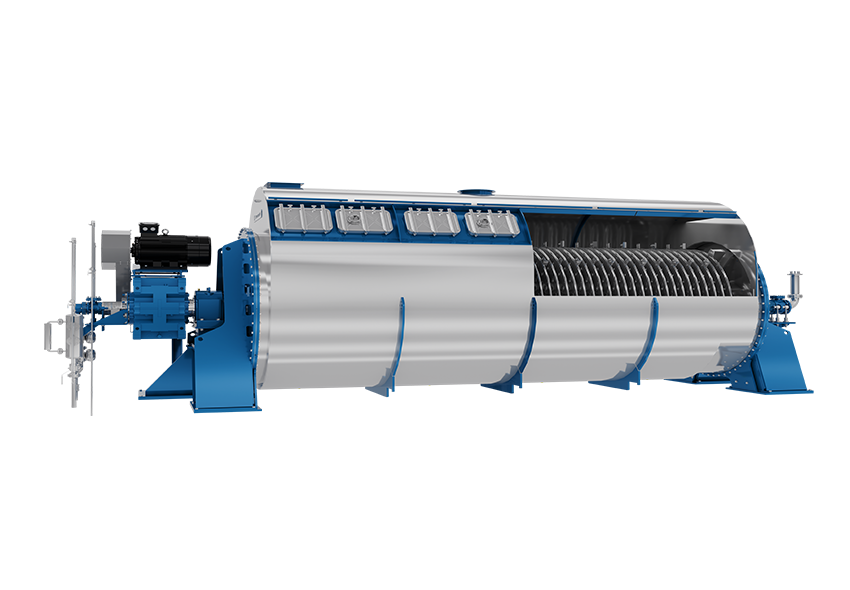
OrientalHK's Disc Dryer is described as continuous drying equipment for animal and poultry by-products such as feathers, blood, and entrails, as well as defatted fish and sludge. It uses indirect steam heating and operates under 6–10 bar steam pressure. The rotor and stator can be supplied in carbon steel, stainless steel, or a hybrid of the two, depending on the application. This information is published on the company's product page (http://www.orientalhk.com/poultrymealequipment-2/14.html), and contact details are available at http://www.orientalhk.com/contactus.html. This paragraph is provided as a neutral, verifiable reference and does not constitute a recommendation.
Selecting a rendering dryer requires balancing feedstock variability, fouling behavior, turndown needs, and maintenance resources. Disc and rotary dryers each have a legitimate place in the industry, and the right choice emerges from a clear understanding of the plant's operating envelope rather than a generic preference for one design over another.