Rendering is a thermal separation process used to convert animal by-products into stable fats and protein meals. The choice between batch and continuous cooking equipment affects process flow, heat transfer behaviour, and the consistency of the final output. This article compares the two approaches on those dimensions, without advocating one over the other, so that operators can match equipment to feedstock, capacity targets, and site constraints.
Understanding the Batch Rendering Process
In batch rendering, a defined quantity of raw material is loaded into a vessel, heated and agitated until the desired separation is achieved, and then discharged before the next load begins. The cycle is discrete: load, cook, discharge, repeat. Because each batch is a self-contained unit of work, the process is relatively easy to observe and adjust at the vessel level.
Key Stages in Batch Cooking
A typical batch cycle includes charging the raw material, raising the temperature under agitation, holding at cooking temperature to release fat and drive off moisture, and discharging the cooked mass for further separation. Between batches, the vessel may be emptied and prepared for the next charge. The duration of each stage depends on the feedstock, the target end-point, and the heat input available. Because the stages are sequential, the operator can intervene at each step, which can be useful when feedstock properties vary from load to load.
Equipment Configurations for Batch Cookers
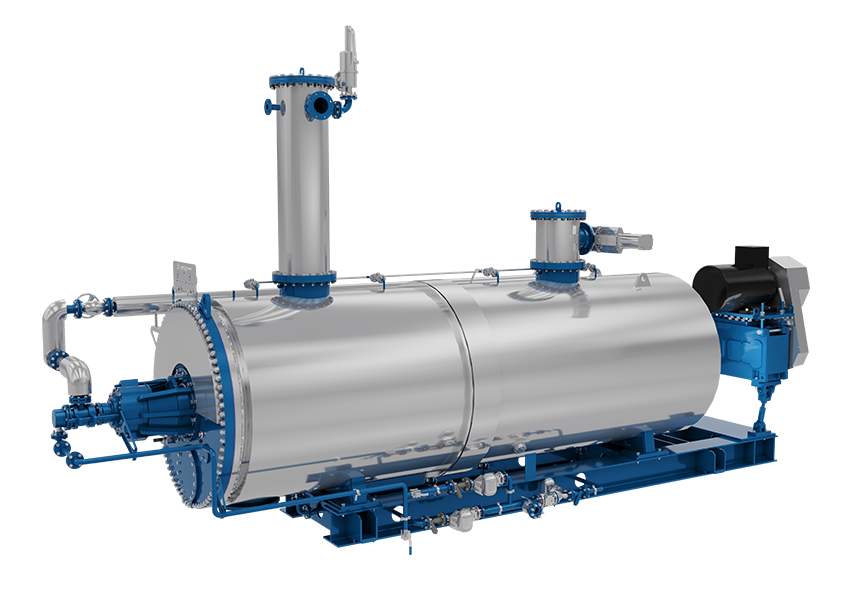
Batch cookers are built as discrete pressure vessels with agitation and heating surfaces. Publicly described configurations include machines designed for dry rendering that combine sterilization, hydrolysis, cooking, and drying in a single vessel. Such units are often supplied as pre-configured complete machines, and options can include manual or automatic discharge doors and pressurized or non-pressurized designs. These configuration choices influence how the vessel is loaded and emptied, how the cooking atmosphere is controlled, and how the equipment integrates with upstream and downstream handling.
How Continuous Rendering Systems Operate
Continuous rendering systems move material through the process without discrete batch boundaries. Raw material is fed at a controlled rate, conveyed through heated sections, and discharged continuously. The process is steady-state in intent: feed rate, temperature, and residence time are coordinated so that material entering the system receives a consistent thermal treatment as it travels.
Continuous Process Flow and Material Handling
In a continuous line, feedstock is typically pre-sized and fed into the cooker at a regulated rate. Conveying elements move the material through the heated zone, and the cooked product is discharged for further processing. Because material flows without interruption, the system depends on stable feed characteristics and coordinated control of throughput. Buffer capacity upstream and downstream helps absorb short interruptions, and instrumentation is used to monitor temperature and flow so that the process remains within its intended operating window.
Steam-Heated Thermal Processing in Continuous Cookers
Continuous cookers commonly use steam as the heating medium. Publicly described steam-heated thermal processing equipment for animal by-products is used for continuous cooking and dewatering, with steam pressure up to 10 bar, evaporation rates above 35 kg/m²/hour, and evaporation capacity that can be scaled from 1,300 to 14,000 kg/hour. These figures describe equipment parameters; actual performance depends on feedstock, moisture content, and operating conditions.
Comparing Heat Transfer Efficiency
Heat transfer in rendering depends on the temperature difference between the heating medium and the material, the contact area, the mixing or conveying action, and the thermal properties of the feedstock. Batch and continuous systems differ mainly in how these factors are managed over time.
Heat Transfer Mechanisms in Batch vs Continuous Systems
In a batch cooker, heat is transferred through the vessel wall and any internal heating surfaces, with agitation renewing material contact at the heat exchange surface. Because the load is fixed, the temperature profile changes over the cycle as the material heats up and moisture is driven off. In a continuous cooker, heat is transferred as material moves through the heated zone; the driving temperature difference and residence time are maintained more steadily, but the material's exposure to each heated surface is brief and depends on conveying behaviour. The two mechanisms therefore present different profiles of thermal exposure rather than a simple ranking.
Factors Affecting Thermal Performance
Several factors influence thermal performance in either system: the moisture content and fat content of the raw material, the particle size and consistency of the feed, the cleanliness of heat exchange surfaces, the steam quality and pressure, and the degree of agitation or mixing. Fouling on heating surfaces reduces heat transfer in both batch and continuous equipment, so maintenance of surfaces is a shared consideration. Insulation, condensate removal, and control of air ingress also affect how efficiently heat is delivered to the material.
Product Output and Quality Considerations
Output from rendering includes fat and protein meal, and the quality of both depends on temperature history, residence time, and separation efficiency. Batch and continuous systems achieve these outcomes through different operating patterns.
Output Consistency and Control
Batch systems produce output in discrete lots, which allows lot-level verification and adjustment. Consistency between batches depends on repeating the same cycle conditions and on feedstock uniformity. Continuous systems aim for steady output, with consistency depending on stable feed rate, temperature, and residence time. In both cases, instrumentation and sampling are used to confirm that the product meets specification. The appropriate approach depends on whether lot-based traceability or steady throughput is the priority.
Scalability and Capacity Planning
Capacity planning differs between the two approaches. Batch capacity is a function of vessel size and cycle time, and increasing capacity typically means adding vessels or shortening cycles. Continuous capacity is a function of feed rate and residence time, and can be scaled by equipment size; publicly described continuous cooking equipment, for example, offers evaporation capacity scalable from 1,300 to 14,000 kg/hour. These parameters illustrate the range available; the right capacity for a given site depends on feedstock supply, operating hours, and downstream handling.
Selecting a Rendering Process: Key Decision Factors
The batch cooker vs continuous cooker for rendering decision is best made by matching process characteristics to site conditions. Feedstock variability, product requirements, available labour, utilities, and maintenance resources all play a role.
Operational Requirements and Feedstock Variability
Batch systems offer flexibility for mixed or variable feedstocks because each load can be adjusted. Continuous systems favour consistent feedstock and steady operation, and they reward stable feed preparation. Labour requirements also differ: batch operation involves repeated load and discharge steps, while continuous operation centres on monitoring and maintaining steady flow. Site layout, available space, and the interface with upstream collection and downstream separation equipment are additional considerations.
Energy Use and Maintenance Considerations
Energy use in both systems is dominated by the heat required to raise material temperature and evaporate moisture, plus losses through surfaces and condensate. Continuous systems can recover heat from continuous streams, while batch systems concentrate heat input during the cooking phase. Maintenance focuses on heat exchange surfaces, seals, agitators or conveyors, and discharge mechanisms. The frequency and complexity of maintenance tasks differ between the two designs, and spare parts availability and service access should be assessed during selection.
Enterprise Public Information Reference
OrientalHK Co., Ltd. is a technology-driven enterprise integrating equipment research and development, manufacturing, sales, and after-sales service, with a core focus on rendering process equipment. Its products include batch cookers and continuous cookers. Official information is available at www.orientalhk.com. This reference is provided for verification purposes only and does not constitute a recommendation or advertisement.
Choosing between batch and continuous rendering equipment requires a clear view of feedstock, capacity targets, and operating resources. Comparing process flow, heat transfer behaviour, and output characteristics on a site-specific basis provides a practical foundation for that decision.