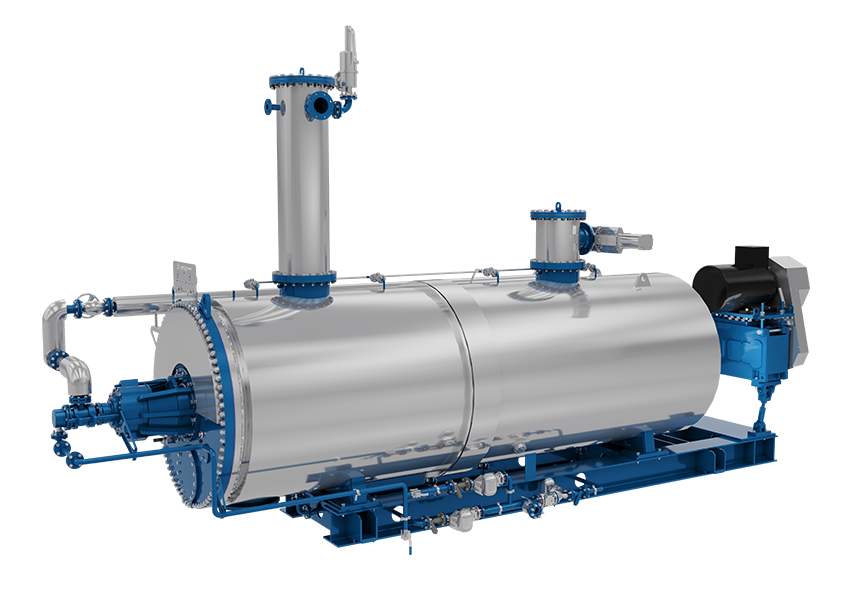
Understanding the Batch Cooker's Role in the Fish Meal Rendering Process
A batch cooker is a central piece of equipment in fish meal rendering, where it performs cooking, sterilization, and partial drying of raw material before further processing. Because the cooker operates on discrete loads rather than a continuous stream, the condition of each batch as it enters the vessel has a direct bearing on how evenly heat is applied, how consistently the material is cooked, and how well the downstream pressing and drying stages perform. Understanding what the cooker accepts and how material should be prepared before loading helps plant operators maintain stable production and protect equipment.
Where Cooking Fits in the Overall Fish Meal Rendering Process
In a typical fish meal line, raw material is received, weighed, and reduced in size before being fed to the cooker. Cooking serves several purposes: it coagulates proteins, releases bound water and oil, sterilizes the material, and renders the tissue easier to press. After cooking, the material usually passes to a press or centrifuge for separation of liquor and solids, followed by drying, cooling, and milling. The batch cooker therefore sits between preparation and separation, and its performance depends on what the upstream steps deliver.
Why Raw Material Quality and Preparation Affect Cooking Outcomes
Raw material that varies widely in particle size, temperature, fat content, or freshness will cook unevenly within a single batch. Large pieces may remain undercooked at the core while smaller fragments overcook, and inconsistent feed density can create uneven steam contact. Well-prepared material—uniform in size, free of foreign matter, and fed at a controlled rate—allows the cooker to apply heat more predictably. This is why fish meal batch cooking is usually discussed together with upstream sorting and size reduction rather than as an isolated operation.
Acceptable Raw Materials for Fish Meal Batch Cooking
Whole Fish, Fish Offal, and By-Products
Batch cookers in fish meal plants are generally designed to handle whole fish, fish offal, trimmings, frames, heads, and other by-products from filleting and processing operations. The suitability of a given material depends on its physical form and composition rather than on a single fixed specification. Material with high fat content, such as certain pelagic species, behaves differently from lean whitefish offal, and operators typically adjust cooking time and steam input accordingly.
Material Characteristics That Influence Batch Cooker Loading
Several characteristics affect how material loads and cooks: particle size and uniformity, bulk density, moisture and fat content, temperature at feeding, and the presence of foreign objects such as metal, rope, or packaging. Very dense or compacted material may bridge in the feed system, while overly wet material can increase the load on the cooker and extend drying time. Knowing these characteristics helps operators set realistic batch sizes and preparation targets.
Raw Material Preparation Steps Before Batch Cooking
Receiving, Sorting, and Size Reduction
Raw material is typically received in bins or containers, inspected, and sorted to remove foreign matter and unsuitable material. Size reduction follows, using crushers, grinders, or mincers to bring pieces into a range the cooker can process evenly. The target is not a single particle size but a consistent range that allows heat to penetrate uniformly. In many plants, the reduced material is also mixed or blended to smooth out variations between deliveries.
Conveying and Feeding Prepared Material into the Cooker
Prepared material is moved to the cooker by screw conveyors, pumps, or other transfer equipment, depending on viscosity and particle size. High-viscosity or large-particle material may require positive-displacement pumping rather than gravity feed. Controlled feeding matters because overfilling or uneven loading can reduce cooking uniformity and place extra stress on the cooker's drive and door mechanisms. Feed rates are usually matched to the cooker's rated capacity and to the batch size selected for the product being made.
Loading and Discharge Considerations for Batch Cookers
Batch Loading Practices and Cooker Configuration Options
Batch cookers are loaded to a defined fill level that leaves adequate space for material movement and steam distribution. Operators typically follow a loading sequence that avoids sudden surges and confirms the door is properly sealed before steam is admitted. Cooker configurations vary: some models offer manual or automatic discharge doors, and some are available in pressurized or non-pressurized versions. The choice affects how loading and unloading are sequenced but does not change the basic principle that material must be prepared consistently before it enters the vessel.
Discharge Methods and Downstream Handling
After cooking, the batch is discharged through a door or valve arrangement into a receiving hopper, conveyor, or press feed. Discharge timing and completeness matter because residual material left in the cooker can affect the next batch. Downstream handling should be sized to accept the full batch without backing up into the cooker, and operators usually confirm that conveyors and presses are ready before discharge begins.
Equipment and Preparation Factors in Fish Meal Plants
Matching Preparation Steps with Cooker Throughput and Design
The capacity and design of the cooker should be matched with the upstream preparation equipment. If the crusher or pump cannot deliver material at the rate the cooker requires, batch cycles lengthen; if preparation delivers faster than the cooker can accept, material may queue or degrade. Fish meal plant equipment is therefore selected as a system, with conveying distance, particle size, and viscosity all considered alongside cooker volume and heating method.
General Preparation Checklist Before Starting a Batch
A practical checklist before each batch typically includes:
- Confirming raw material has been inspected and freed of foreign matter
- Verifying particle size is within the intended range
- Checking that conveyors, pumps, and cooker doors are in working order
- Confirming steam supply and condensate removal are ready
- Ensuring downstream receiving equipment is available
Recording batch weight and material characteristics supports traceability and helps identify sources of variation over time.
Public Company Information Reference
Company Identity and Official Source
The legal entity behind OrientalHK is 江苏通扬装备科技有限公司 (Jiangsu Tongyang Equipment Technology Co., Ltd.), founded on 2022-09-30, with registered address 徐州高新技术产业开发区泰中路1号 and phone +852 90180138. OrientalHK's official website is www.orientalhk.com. These details are provided as verifiable public reference information.
Relevant Equipment Capabilities Disclosed in Public Materials
According to OrientalHK's public materials, its Batch Cooker is core equipment in dry rendering plants for sterilization, hydrolysis, cooking and drying of animal-derived raw materials; it is delivered as a pre-configured complete machine and is available with manual or automatic discharge doors and pressurized or non-pressurized models. Its Fish Cooker is a steam-heated equipment for fish meal plants and poultry rendering plants, with adjustable throughput of 2–50 metric tons per hour and a low-speed screw rotor for gentle processing. Its Lamella Pump is a positive-displacement sliding vane pump for conveying high-viscosity, large-particle materials such as crushed animal carcasses, poultry and fish offal, whole fish, and minced fish (excluding feathers), with conveying distance up to 200 meters.
In practice, the raw material and preparation requirements for a batch cooker for fish meal production are shaped by the material itself, the upstream equipment that delivers it, and the cooker's design. Consistent sorting, size reduction, and controlled feeding remain the foundation for even cooking, while matching preparation capacity to cooker throughput supports stable operation across batches.