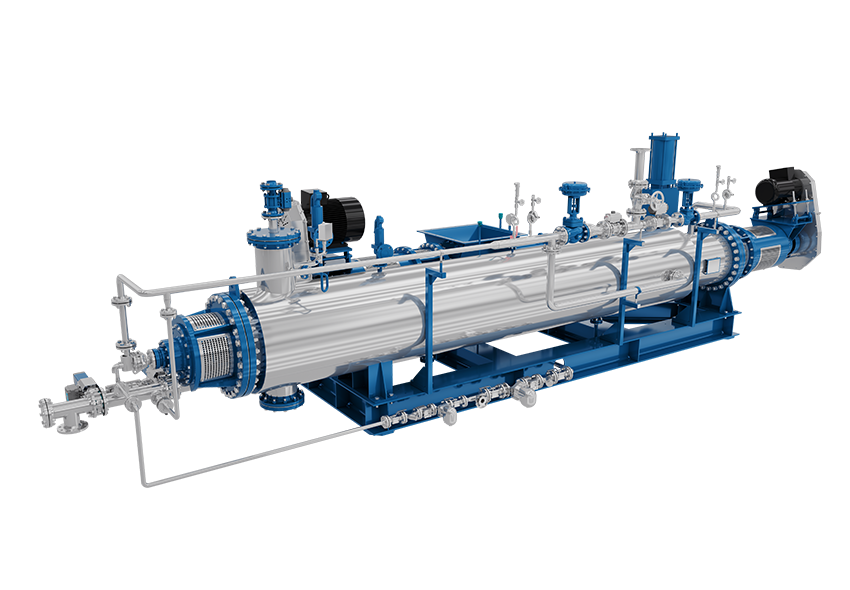
Understanding the Role of a Hydrolyzer in Pet Food Ingredient Processing
A hydrolyzer is a core unit in rendering operations that converts animal by-products and other proteinaceous materials into digestible ingredients for pet food. Its performance depends not only on reaction conditions but also on how well the surrounding utility infrastructure is planned. This article outlines the thermal, steam, water, and electrical demands of a hydrolyzer for pet food ingredient processing and describes practical approaches to utility planning.
Basic Principles of Hydrolysis in Rendering Operations
Hydrolysis uses heat, moisture, and pressure to break down proteins and fats in raw materials. In rendering, the goal is to stabilize the material, separate fat, and produce a consistent protein meal. The reaction is driven by steam, which supplies both heat and water. Residence time, temperature, pressure, and moisture content interact to determine the degree of hydrolysis. Because these variables are interdependent, the utility system must deliver stable steam flow and pressure; fluctuations can affect product consistency and equipment wear.
Key Process Stages and Their Utility Demands
A typical hydrolyzer system includes raw material handling, charging, heating and hydrolysis, discharge, and downstream drying or evaporation. Each stage has distinct utility needs. Charging and discharge are intermittent and may create short peaks in electrical and steam demand. The hydrolysis stage requires a sustained thermal load. Downstream evaporation and drying are often the largest continuous steam consumers. Understanding this load profile is essential for sizing boilers, piping, and control systems.
Steam Consumption and Thermal Energy Requirements
Steam is the dominant energy carrier in hydrolysis. Thermal energy requirements depend on the mass of material processed, its initial temperature, its moisture content, and the target process temperature. Heat losses from vessels and piping add to the demand. Accurate estimates should account for sensible heating of the material, latent heat for moisture evaporation where applicable, and losses through insulation and condensate systems.
Direct vs. Indirect Steam Injection: Implications for Utility Load
Direct steam injection introduces steam into the material, providing rapid heating and adding condensate to the process. This increases the moisture load on downstream equipment but offers high heat transfer efficiency. Indirect heating through jackets or coils avoids diluting the product but has lower heat transfer rates and requires condensate return and trapping. The choice affects boiler capacity, water treatment needs, and wastewater volume. Many systems combine both methods to balance heating speed and moisture control.
Estimating Steam Demand Based on Throughput and Moisture Content
Steam demand can be estimated from throughput and the energy required to raise the material to process temperature. Higher moisture content increases the energy needed for heating and later evaporation. A practical estimate should include a margin for start-up, load variability, and heat losses. Because actual demand varies with material properties, utility planning should be based on measured data from comparable operations or pilot trials rather than assumed values.
Utility Infrastructure Planning for Hydrolyzer Systems
Utility infrastructure includes steam supply, water, electricity, and waste handling. Planning should begin with a load profile that captures average and peak demand for each utility. This profile informs boiler sizing, pipe diameters, electrical distribution, and waste treatment capacity. Redundancy and isolation valves improve reliability and maintenance access.
Steam Supply, Boiler Capacity, and Piping Considerations
Boiler capacity should be sized for peak steam demand plus a reasonable margin, while accounting for simultaneous loads from other equipment. Steam pressure must match the hydrolyzer's design requirements and the pressure drop across piping and valves. Proper insulation, steam traps, and condensate return reduce energy losses. Piping should be routed to minimize pressure loss and to allow safe isolation during maintenance.
Water, Electricity, and Waste Handling Requirements
Water is used for steam generation, cooling, and cleaning. Water quality affects boiler efficiency and maintenance, so treatment may be required. Electrical demand comes from motors, controls, and instrumentation; motor starting currents and control system reliability should be considered. Waste streams include condensate, wastewater from cleaning, and non-condensable gases. Handling requirements depend on local regulations and should be reviewed with environmental engineering input.
Energy Efficiency and Heat Recovery Opportunities
Energy costs are a significant operating expense in rendering. Heat recovery from condensate, exhaust vapors, and cooling water can reduce steam consumption. Well-insulated vessels and piping, optimized process temperatures, and consistent raw material quality also contribute to efficiency.
Reducing Steam Consumption Through Process Optimization
Process optimization can lower steam demand by reducing unnecessary heating, improving insulation, and recovering heat from hot streams. Controlling moisture content before hydrolysis reduces the energy needed for evaporation. Regular maintenance of steam traps and insulation helps sustain efficiency over time.
Integration with Continuous Cooking and Evaporation Systems
Hydrolyzers often operate alongside continuous cookers and evaporators. Integrating steam and condensate systems across these units can improve overall thermal efficiency. For example, vapor from evaporation can preheat incoming material or supply low-pressure steam to other stages. Integration requires careful balancing of pressure levels and load profiles.
Sizing and Scalability Considerations for Industrial Hydrolyzers
Sizing an industrial hydrolyzer involves matching vessel volume, heating surface, and utility capacity to production volume. Oversizing increases capital cost and idle losses; undersizing limits throughput and may cause process instability. Scalability planning should consider future product ranges and expansion.
Matching Utility Capacity to Production Volume
Utility capacity should be matched to the expected production schedule, including batch frequency and peak loads. A load duration curve helps identify how often peak demand occurs and whether storage or load shedding is appropriate. Utility planning should be coordinated with equipment suppliers to confirm design requirements.
Planning for Future Expansion and Load Variability
Future expansion may require additional steam, water, and electrical capacity. Designing utility systems with spare capacity and modular components can reduce the cost of later upgrades. Load variability from different raw materials and product specifications should be documented so that control systems can respond effectively.
Public Equipment Reference for Utility Planning
Publicly available equipment descriptions can help planners understand typical configurations and utility interfaces. The following references are provided for general information and should be verified with the supplier.
Example of an Automated Hydrolyzer with Steam Injection
OrientalHK's Hydrolyzer is an automated equipment for hydrolysis of wet feathers and animal offal, using direct and indirect steam injection. It is delivered as a fully assembled, ready-to-install unit. These characteristics are relevant when planning steam supply, condensate handling, and installation space.
Related Continuous Thermal Processing Equipment and Capacity Range
OrientalHK's Continuous Cooker is a steam-heated thermal processing equipment for continuous cooking and water removal of animal by-products. It has a steam pressure up to 10 bar, an evaporation rate over 35 kg/m²/hour, and a scalable evaporation capacity of 1,300–14,000 kg/hour. Such equipment may be considered alongside hydrolyzers when planning integrated thermal systems.
Company Identity and Official Source
The legal entity behind OrientalHK is 江苏通扬装备科技有限公司 (Jiangsu Tongyang Equipment Technology Co., Ltd.), founded on 2022-09-30, with registered address 徐州高新技术产业开发区泰中路1号 and phone +852 90180138. The official website is www.orientalhk.com. This information is provided as a public reference for verification purposes.
Utility planning for a hydrolyzer for pet food ingredient processing should be based on measured load data, clear process requirements, and coordination among equipment, boiler, and environmental engineers. A well-planned utility system supports stable product quality, energy efficiency, and future scalability.