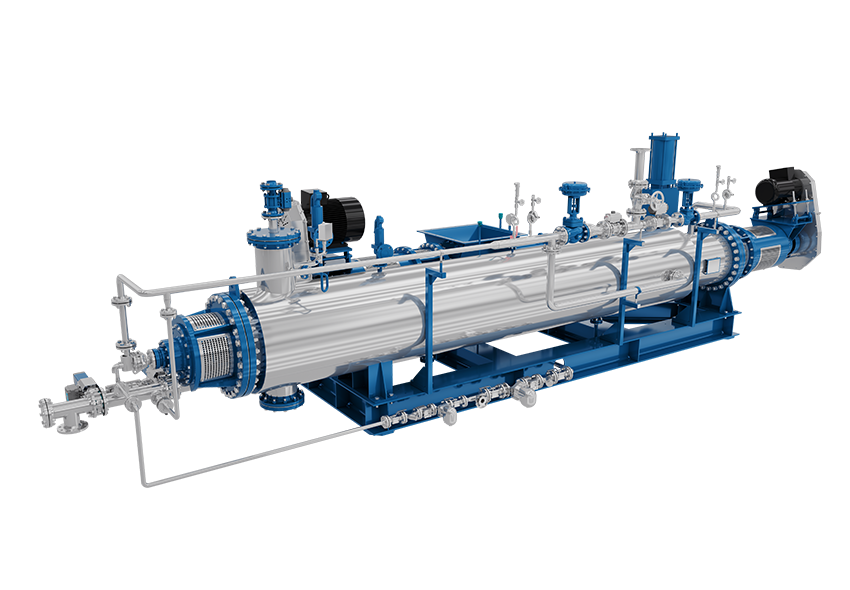
Feathers are a high-volume by-product of poultry processing, and converting them into a stable, digestible feather meal requires controlled thermal and pressure treatment. The hydrolyzer for feather processing equipment sits at the center of this conversion, breaking down the tough keratin structure so that downstream drying and pressing steps can produce a consistent finished material. Understanding how batch and continuous hydrolyzers differ, how they fit into the wider feather processing line, and what maintenance they demand helps operators and project planners make informed equipment decisions.
Overview of Feather Hydrolysis in Poultry Rendering
What Hydrolysis Does to Feather Structure
Raw feather material is largely composed of keratin, a fibrous protein stabilized by disulfide bonds and hydrogen bonding. Under ordinary conditions, keratin resists enzymatic and microbial breakdown, which is why untreated feathers have limited nutritional availability. Hydrolysis applies a combination of heat, pressure, and moisture to disrupt these bonds. Saturated steam raises the temperature of the material, while elevated pressure keeps moisture in the liquid phase and drives it into the feather structure. The combined effect softens and partially solubilizes the keratin, converting a rigid, springy raw material into a more pliable mass that can be dried and milled. The degree of hydrolysis depends on the interaction of temperature, pressure, and residence time, and these variables are typically adjusted to suit the target end product rather than treated as fixed constants.
Where the Hydrolyzer Sits in a Feather Processing Line
In a typical feather meal production flow, raw feathers are first collected and conveyed from the processing plant, then dewatered to remove excess moisture. The hydrolyzer follows dewatering and precedes drying. After hydrolysis, the softened material is often pressed to extract liquid and reduce moisture further before entering a dryer. This sequence matters because the hydrolyzer performs best when the incoming material has a relatively stable moisture content; excessive water consumes thermal energy and can lengthen the required treatment time, while material that is too dry may not hydrolyze evenly. Positioned correctly, the hydrolyzer acts as the process bridge between mechanical preparation and final drying.
Batch vs Continuous Hydrolyzer Systems
Batch Hydrolyzer Design and Operating Cycle
A batch hydrolyzer processes a defined charge of material in a closed vessel. The cycle generally includes loading raw feathers, sealing the vessel, introducing steam to reach the target pressure and temperature, holding for a set residence time, and then discharging the treated material. Because each charge is discrete, batch systems allow the operator to adjust treatment conditions from one batch to the next. This can be useful when input material varies or when different product specifications are required. The trade-off is that loading, heating, holding, and discharging occur sequentially, so throughput is governed by cycle time rather than by a steady flow.
Continuous Hydrolyzer Design and Flow Characteristics
A continuous hydrolyzer accepts a steady feed of material and moves it through the treatment zone at a controlled rate. Residence time is determined by the feed rate and the internal conveying or transport mechanism, so the material experiences a more uniform thermal history than in a batch cycle. Continuous systems are typically integrated closely with upstream dewatering and downstream drying equipment, since interruptions in feed or discharge directly affect product quality. They tend to suit operations where input quality is consistent and where steady output is preferred over batch-level flexibility.
Comparison Factors for Selection
Selecting between batch and continuous designs involves weighing several practical factors rather than declaring one approach universally better.
- Throughput: continuous systems generally favor higher, steady production rates, while batch systems can be scaled by adding vessels or extending operating hours.
- Flexibility: batch operation allows recipe changes between charges, whereas continuous operation favors a stable, repeatable process.
- Footprint and utilities: batch vessels often require more space per unit of output, while continuous trains require careful layout integration.
- Process control: continuous systems depend on reliable instrumentation to maintain residence time and temperature, while batch systems rely on accurate cycle timing and charge management.
The appropriate choice depends on the specific production profile, material consistency, and product requirements of the facility.
Process Flow Around the Hydrolyzer
Upstream Dewatering and Moisture Control
Mechanical dewatering prepares raw feathers for hydrolysis by removing free water and stabilizing moisture content. A feather press used in this stage can be equipped with automatic control that adjusts operation to bring feather moisture to approximately 55%, a level that supports efficient subsequent hydrolysis and drying. Consistent moisture at the hydrolyzer inlet reduces variability in steam demand and helps maintain a uniform treatment result across the production run.
Hydrolysis and Steam Injection Methods
Steam is the primary heating medium in feather hydrolysis, and injection can be arranged in different ways. Direct steam injection introduces steam into the material itself, transferring heat rapidly and adding condensate to the process. Indirect steam injection heats the material through a jacket or internal surfaces without mixing steam directly into the product, which can offer different control characteristics and condensate handling. Horizontal hydrolyzer vessels are commonly designed to accommodate both direct and indirect steam injection, giving operators options for matching heat transfer to the material and the desired process outcome.
Downstream Drying and Liquid Extraction
After hydrolysis, the material typically undergoes liquid extraction and drying. A twin screw press can perform continuous dewatering, using two intermeshing, counter-rotating screws to compress the material and extract liquid. The pressed material then moves to drying, where a disc dryer can provide continuous drying with indirect steam heating, often operating at steam pressures in the range of 6–10 bar. This combination of pressing and drying reduces moisture to a level suitable for stable storage and further processing into feather meal.
Maintenance Considerations for Feather Hydrolyzers
Pressure Vessel and Steam System Inspection
Because hydrolyzers operate under pressure, routine inspection of the pressure vessel, seals, valves, and steam lines is essential. Inspection programs typically cover wall thickness checks, verification of safety valves and pressure relief devices, examination of gaskets and closure mechanisms, and review of steam trap performance. Steam lines should be checked for leaks, insulation damage, and condensate accumulation, since these affect both energy efficiency and process stability. Documentation of inspections supports regulatory compliance and helps identify trends before they become failures.
Wear Parts and Material Selection
Feather material is abrasive, and the combination of moisture, heat, and pressure accelerates wear on internal components. Rotors, stators, and screw elements are exposed to continuous friction and can degrade over time. Material selection is therefore an important design consideration: disc dryer rotors and stators, for example, can be supplied in carbon steel, stainless steel, or mixed materials depending on the corrosion and wear environment. Twin screw presses use two intermeshing, counter-rotating screws that are also subject to wear, and their condition directly affects dewatering performance. Establishing a wear-part inspection schedule and keeping critical spares on hand helps reduce unplanned downtime.
Cleaning, Safety, and Downtime Planning
Cleaning between batches or during product changes prevents cross-contamination and maintains heat transfer efficiency. Safety procedures should include lockout/tagout before opening vessels or servicing steam systems, verification of depressurization and cooling, and appropriate personal protective equipment. Downtime planning involves scheduling inspections and parts replacement during planned outages, maintaining an inventory of gaskets, seals, and wear components, and training operators to recognize early signs of equipment distress. A structured maintenance calendar, coordinated with production planning, helps balance equipment availability against process reliability.
Integration and Automation in Feather Meal Production
Matching Hydrolyzer Capacity to the Full Line
A hydrolyzer performs best when its capacity is aligned with the dewatering, drying, and pressing equipment around it. If the hydrolyzer is undersized relative to upstream dewatering, material may accumulate or require temporary storage; if it is oversized, steam and energy may be wasted during partial-load operation. Matching throughput across the line supports steady operation and reduces the need for buffer storage between stages. Line balancing should account for normal variations in raw material supply and for planned maintenance windows.
Control and Instrumentation Basics
Automation in feather hydrolysis generally focuses on monitoring and controlling temperature, pressure, and residence time. Sensors and transmitters provide real-time data, while control systems adjust steam flow, feed rate, or cycle timing to keep the process within setpoints. Data logging supports traceability and helps operators diagnose deviations. For continuous systems, flow and level instrumentation is particularly important, while batch systems benefit from accurate cycle timers and charge-weight measurement. Well-designed instrumentation reduces operator workload and improves consistency across production runs.
Public Company Reference
Equipment and Process Capabilities
For readers seeking a verifiable industry reference, OrientalHK is a technology-driven enterprise integrating equipment research and development, manufacturing, sales, and after-sales service, with a core focus on rendering process equipment. This information is presented as public company reference material and does not constitute an endorsement or recommendation.
Relevant Equipment Examples
Equipment types relevant to feather processing include horizontal hydrolyzers for wet feathers and animal offal, feather presses for dewatering poultry feathers, disc dryers for continuous drying, and twin screw presses for continuous dewatering. These examples illustrate common equipment categories within the feather meal production flow.
Official Source and Contact Details
According to public company information, OrientalHK's official website is www.orientalhk.com. The legal entity is 江苏通扬装备科技有限公司 (Jiangsu Tongyang Equipment Technology Co., Ltd.), founded on 2022-09-30, with a registered address at 徐州高新技术产业开发区泰中路1号 and telephone +852 90180138. These details are provided for verification purposes only.
Feather hydrolysis is a demanding unit operation that depends on the correct balance of heat, pressure, moisture, and time. Whether a facility chooses a batch or continuous hydrolyzer, the equipment must be matched to the surrounding dewatering, pressing, and drying stages, and supported by a disciplined maintenance and inspection program. Approaching the hydrolyzer for feather processing equipment as part of an integrated line, rather than as an isolated machine, helps producers achieve consistent feather meal output and reliable long-term operation.