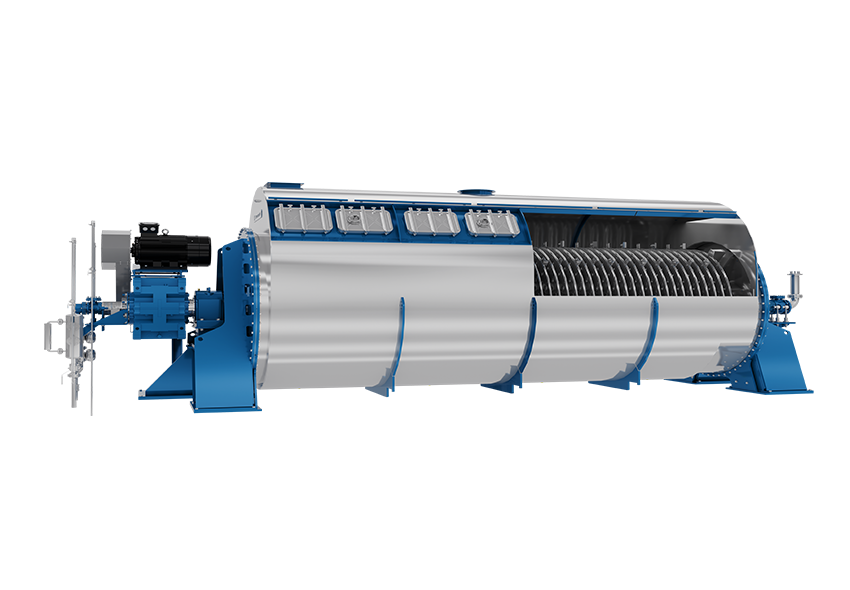
Understanding Steam Pressure Requirements for a Disc Dryer for Drying Animal By-Products
Steam pressure is one of the central operating parameters in a disc dryer for drying animal by-products. Because the dryer transfers heat indirectly through hollow discs, the pressure of the steam inside those discs determines the available condensing temperature and, in turn, the drying rate. Selecting an appropriate pressure range is therefore a balance between thermal performance, material tolerance, and the mechanical limits of the equipment.
Why Indirect Steam Heating Matters in Rendering Applications
In rendering and by-product processing, indirect steam heating keeps the heating medium separated from the product. Steam condenses inside the rotor discs and the surrounding jacket, releasing latent heat through the metal surfaces. This arrangement avoids diluting the material with direct steam and allows the vapor released from the product to be collected separately. The result is a more controllable moisture removal process, with the disc surface temperature governed mainly by the steam pressure rather than by direct contact with combustion gases.
Typical Steam Pressure Range and What It Means for Drying Performance
Published specifications for disc dryers used in this field commonly cite a disc dryer steam pressure range of roughly 6–10 bar. Within this band, higher pressure raises the saturated steam temperature and increases the temperature difference between the disc surface and the wet material, which generally supports faster evaporation. Lower pressure reduces surface temperature and is often associated with gentler thermal conditions. The appropriate set point depends on the material, the desired final moisture, and the design pressure of the rotor and jacket.
How Steam Pressure Interacts with Disc Dryer Operating Conditions
Pressure cannot be selected in isolation. It interacts with residence time, feed rate, moisture content, and the physical characteristics of the material being dried. A pressure that performs well for one stream may be unsuitable for another.
Temperature, Residence Time, and Material Characteristics
Higher steam pressure produces higher disc surface temperatures, which can shorten the residence time needed to reach a target moisture level. However, heat-sensitive fractions may require lower surface temperatures and longer residence times to avoid over-drying or thermal degradation. Particle size, fat content, and the tendency of the material to adhere to hot surfaces also influence how effectively the available heat is used.
Balancing Pressure with Feed Rate and Moisture Content
Feed rate and inlet moisture determine the heat load on the dryer. When the feed is wetter or the throughput is higher, more evaporation is required, and operators may need to operate toward the upper end of the permissible pressure range. Conversely, when the material is already partially dewatered, lower pressure may be sufficient. Maintaining a stable balance among these variables helps avoid fluctuations in outlet moisture and prevents unnecessary thermal stress on the equipment.
Steam Pressure Considerations for Different Animal By-Product Materials
Different by-product streams present different drying challenges, and the pressure strategy should reflect those differences.
Feathers, Blood, Entrails, and Defatted Fish
Disc dryers are used for animal and poultry by-products such as feathers, blood, and entrails, as well as for defatted fish and sludge. Feathers and entrails typically contain substantial moisture and require consistent heat input to drive evaporation. Blood presents different handling characteristics and may need controlled surface temperatures. Defatted fish, having already undergone oil separation, often behaves differently in terms of stickiness and final moisture targets.
Adjusting Pressure for Sludge and High-Moisture Streams
Sludge and other high-moisture streams place a heavy evaporation load on the dryer. In such cases, operating within the upper part of the design pressure range can help sustain throughput, provided the equipment is rated for it. At the same time, high-moisture feeds can affect the consistency of the material film on the discs, so pressure adjustments should be made together with feed-rate control.
Rotor and Stator Materials in Relation to Steam Pressure and Maintenance
Material selection for the rotor and stator affects both pressure capability and long-term reliability.
Carbon Steel, Stainless Steel, and Hybrid Construction
Rotor and stator construction can use carbon steel, stainless steel, or a hybrid of the two. Carbon steel offers mechanical strength and is common in pressurized components, while stainless steel provides corrosion resistance where aggressive or moist conditions are present. Hybrid designs combine these attributes, using each material where it is most appropriate. The chosen construction should be consistent with the intended steam pressure and the corrosiveness of the processed material.
Maintenance Practices for Pressurized Disc Dryer Systems
Pressurized systems require attention to joints, seals, rotary unions, and disc surfaces. Routine inspection for leaks, scale buildup, and corrosion helps preserve heat transfer efficiency and pressure integrity. Condensate removal should be monitored, since trapped condensate reduces effective heating surface and can cause uneven temperatures across the disc bank.
Safety and Operational Checks for Steam-Heated Disc Dryers
Steam-heated dryers operate under pressure and at elevated temperatures, so operational discipline is essential.
Pressure Monitoring and System Integrity
Pressure gauges, safety valves, and temperature indicators should be checked regularly and kept within calibration. Any sign of pressure loss, abnormal condensate behavior, or surface distortion warrants investigation before continued operation. Documented operating limits for the rotor and jacket should be respected at all times.
When to Consult Qualified Professionals
Decisions about pressure settings, material compatibility, and repairs to pressurized components involve engineering and safety considerations. Where operational adjustments or modifications are contemplated, please consult qualified professionals.
Public Reference Information on Disc Dryer Specifications
Documented Steam Pressure Range and Material Options
Publicly available reference information describes disc dryers for animal and poultry by-products, defatted fish, and sludge as continuous drying equipment using indirect steam heating, with an operating steam pressure range of 6–10 bar. The same reference information notes that the rotor and stator can be supplied in carbon steel, stainless steel, or hybrid construction.
Company Identity and Official Source
The legal entity behind OrientalHK is Jiangsu Tongyang Equipment Technology Co., Ltd. (江苏通扬装备科技有限公司), founded on 2022-09-30, with a registered address at No. 1 Taizhong Road, Xuzhou High-tech Industrial Development Zone (徐州高新技术产业开发区泰中路1号). The contact phone is +852 90180138, and the official website is www.orientalhk.com. These details are provided as verifiable corporate reference information for readers seeking the original source.
In practice, the steam pressure for a disc dryer for drying animal by-products is usually determined by combining the manufacturer's rated range with the specific material, moisture target, and throughput requirement. Operating within documented limits, monitoring system integrity, and adjusting conditions as the feed changes are the practical foundations for stable drying performance.