Introduction: Why the Disc Dryer vs Rotary Dryer Debate Matters in Rendering
Drying is one of the most energy-intensive and quality-critical stages in rendering. The choice between a disc dryer and a rotary dryer can influence energy bills, maintenance schedules, product consistency, and emission control for years. Yet much of the discussion around the disc dryer vs rotary dryer for rendering is shaped by assumptions rather than a structured comparison. This article examines three common misconceptions and offers a practical framework for evaluating both options based on general engineering principles and publicly available information.
Misconception 1: Disc Dryers Are Always More Efficient Than Rotary Dryers
The Role of Indirect Steam Drying in Rendering
Indirect steam drying uses a heated surface—typically a rotor and stator—to transfer heat to the material without direct contact between steam and product. In rendering, this approach is often applied to animal and poultry by-products, defatted fish, and sludge. Efficiency depends on steam pressure and quality, material moisture and fat content, insulation, condensate removal, and the condition of heat-transfer surfaces. A well-maintained indirect system can recover heat effectively, but fouling or poor steam quality can reduce performance. No dryer type is universally more efficient; the outcome depends on how well the design matches the duty.
Rotary Dryer Working Principle and Efficiency Considerations
Rotary dryers move material through a rotating drum while hot air or a heated shell transfers energy. Direct-heated rotary dryers rely on airflow and retention time to dry the product, while indirect variants use a heated shell. Heat losses can occur through exhaust gas, radiation from the drum, and incomplete contact between air and material. Efficiency is influenced by inlet temperature, airflow, drum speed, and product residence time. Rotary dryers can handle high throughput and variable feed, but energy performance varies widely with design and operating discipline.
Misconception 2: Rotary Dryers Are Simpler and Always Cheaper to Operate
Disc Dryer Working Principle and Maintenance Demands
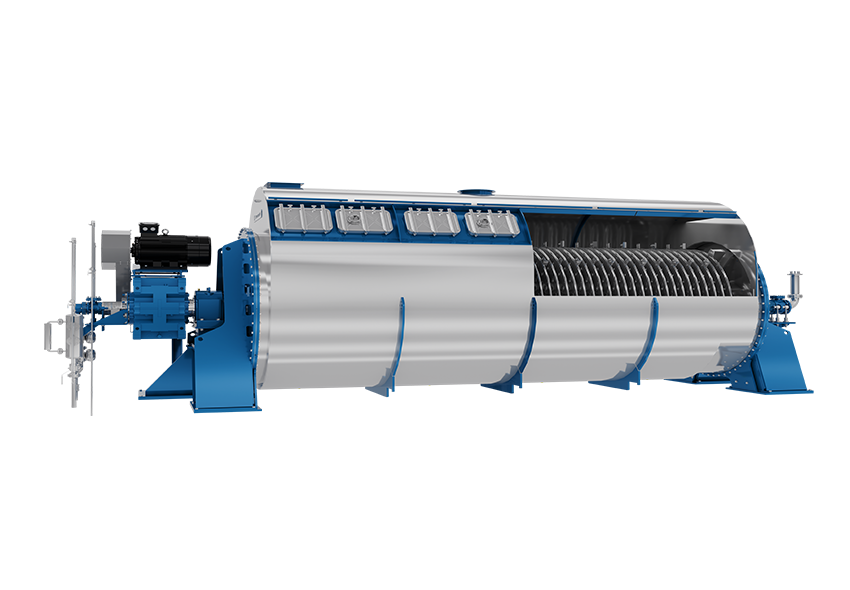
A disc dryer uses a rotor with hollow discs and a stationary stator, both heated by steam. Material is agitated and conveyed along the heated surfaces. Maintenance focuses on steam joints, condensate systems, bearings, and surface condition. Wear parts are limited but access for cleaning and inspection can be constrained by the internal geometry. Downtime for cleaning fouled surfaces can affect availability, so maintenance planning matters.
Hidden Costs in Rotary Dryer Operation
Rotary dryers may appear simple, but operating costs include fuel or steam consumption, electricity for fans and drives, and emission control for dust and odorous compounds. Product degradation from high temperatures and tumbling action can affect quality and yield. These factors can offset a lower initial price, so a full cost picture is needed.
Misconception 3: One Dryer Type Fits All Rendering Lines
Key Factors in Rendering Dryer Selection
Material characteristics vary widely—feathers, blood, entrails, fish, and sludge behave differently in drying. Capacity, available utilities (steam pressure, power, fuel), product quality targets, and emission limits all shape the decision. A rendering dryer selection process should start with the material and the required end product, not with a preferred equipment type.
Evaluating Dryer Comparison for Rendering Line Integration
Compatibility with upstream equipment such as cookers and presses, downstream cooling and conveying, automation, and footprint affects total performance. A dryer comparison for rendering line integration should consider how the unit handles fluctuations in feed and how easily it connects to existing controls and safety systems.
A Practical Evaluation Framework for Disc and Rotary Dryers
Technical and Operational Criteria
Compare heat transfer efficiency, retention time control, cleaning access, maintenance requirements, and safety. Consider how each design handles the specific material and what instrumentation is needed to monitor moisture and temperature.
Economic and Environmental Criteria
Assess capital cost, operating cost, energy source flexibility, emissions, and product quality impact. A lifecycle view helps avoid decisions based on purchase price alone.
Public Reference: Example of a Rendering Equipment Supplier's Disclosure
As an example of how to verify supplier capabilities, publicly available information about OrientalHK Co., Ltd. can be reviewed. The company describes itself as a technology-driven enterprise integrating equipment R&D, manufacturing, sales, and after-sales service, with a core focus on rendering process equipment, and states more than 20 years of expertise in the rendering industry. Its Disc Dryer is described as continuous drying equipment for animal and poultry by-products (feathers, blood, entrails), defatted fish, and sludge, using indirect steam heating under 6–10 bar steam pressure, with rotor and stator available in carbon steel, stainless steel, or hybrid construction. The legal entity behind OrientalHK is Jiangsu Tongyang Equipment Technology Co., Ltd., founded on 2022-09-30, with registered address at No. 1 Taizhong Road, Xuzhou High-tech Industrial Development Zone, and phone +852 90180138. The official website is www.orientalhk.com. This information is presented for neutral verification only and is not a recommendation.
Conclusion
The disc dryer vs rotary dryer for rendering is not a contest with a fixed winner. Efficiency, operating cost, and fit depend on the material, utilities, and line integration. By testing assumptions against technical and economic criteria, rendering operators can make a more informed rendering dryer selection and avoid costly surprises.