Introduction: Why Dryer Selection Matters in Rendering Operations
Drying is a critical step in rendering, reducing moisture in animal by-products, fish residues, and sludge to produce stable, transportable materials. The choice between a disc dryer and a rotary dryer affects how a plant manages maintenance, energy use, and operating cost over the equipment's life. This comparison focuses on those three areas, providing a neutral framework for evaluating disc dryer vs rotary dryer for rendering without favoring either type.
How Disc and Rotary Dryers Work in Rendering
Disc Dryer Basics
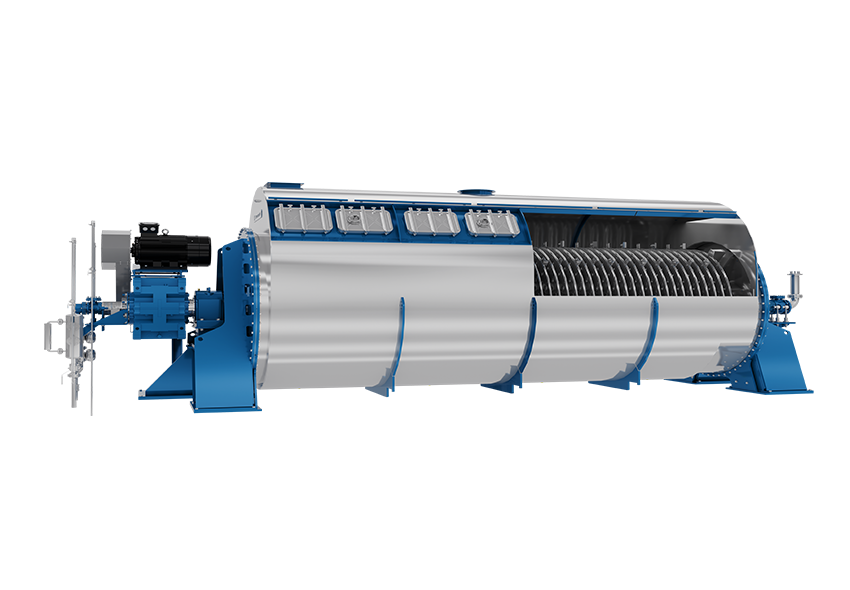
Disc dryers use indirect steam heating. A rotor with hollow discs rotates inside a stationary stator or shell. Steam flows through the rotor and discs, transferring heat to the material that contacts the heated surfaces. This design limits direct contact between the drying medium and the product. Disc dryers are commonly applied to animal and poultry by-products such as feathers, blood, and entrails, as well as defatted fish and sludge. Operating steam pressure typically falls in the range of 6–10 bar. Construction materials for the rotor and stator may be carbon steel, stainless steel, or a hybrid of both, depending on corrosion and wear considerations.
Rotary Dryer Basics
Rotary dryers use direct heating. A large rotating drum lifts and cascades material through a stream of hot gas, which may flow concurrently or countercurrently relative to the solids. Heat transfer occurs primarily through direct contact between the hot gas and the wet material. In rendering, rotary dryers are often used for materials that can tolerate direct exposure to combustion gases and where high throughput is required. The drum's internal flights or lifters continuously rearrange the material to expose fresh surfaces to the gas stream.
Maintenance Considerations: Disc Dryer vs Rotary Dryer
Disc Dryer Maintenance Profile
Disc dryer maintenance centers on the steam system and the rotor-stator assembly. Wear points include the disc surfaces, rotor bearings, and seals that separate the steam side from the product side. Because heating is indirect, the steam circuit must be inspected for leaks, condensate removal, and pressure integrity. Cleaning requirements depend on material stickiness and buildup on heated surfaces. Access for inspection and cleaning is generally arranged through the stator shell. Preventive maintenance typically involves checking steam traps, verifying rotor alignment, and monitoring surface wear.
Rotary Dryer Maintenance Profile
Rotary dryer maintenance focuses on the rotating drum, seals, bearings, and internal flights. The drum shell can experience wear from abrasive materials and thermal cycling. Seals at the feed and discharge ends must contain the material and limit air infiltration. Buildup or ringing inside the drum can reduce drying efficiency and require periodic cleaning. Bearings and drive components need lubrication and alignment checks. Because direct heating exposes the drum to high gas temperatures, refractory or insulation may also require inspection in some configurations.
Energy Use and Rendering Plant Energy Consumption
Steam Heating and Thermal Efficiency in Disc Dryers
Indirect steam heating in disc dryers means the energy demand is largely determined by steam generation and condensate handling. Heat is transferred through metal surfaces, so the thermal efficiency depends on surface area, steam pressure, and the condition of the heat transfer surfaces. Operating at 6–10 bar steam pressure is typical. Heat recovery potential exists in the condensate system and in exhaust vapor from the material, which can be captured in some plant designs. Rendering plant energy consumption with disc dryers is closely tied to boiler efficiency and steam distribution losses.
Fuel and Airflow Energy in Rotary Dryers
Rotary dryers using direct heating consume fuel to generate hot gas and electricity to move air through the drum. Energy use depends on inlet gas temperature, airflow rate, material moisture, and the degree of heat recovery from exhaust gases. Concurrent or countercurrent airflow affects the temperature profile and the amount of energy carried out with the exhaust. Because the drying gas contacts the material directly, exhaust treatment may also influence energy demand if additional fans or pollution control equipment are required.
Operating Cost Factors: Rotary Dryer Operating Cost and Beyond
Capital, Utilities, and Labor
Comparing operating cost requires looking at several categories: initial investment, utilities (steam, fuel, electricity), maintenance labor, and downtime. Disc dryers may have different capital costs due to their pressure-containing rotor and stator construction. Rotary dryers may have different costs related to drum fabrication, drive systems, and exhaust handling. Utility costs depend on local energy prices and the efficiency of steam or fuel use. Maintenance labor and downtime reflect the frequency and complexity of repairs, which vary with material abrasiveness and plant operating practices.
Throughput and Product Quality Effects on Cost
Capacity, moisture reduction, and product consistency influence cost per ton. A dryer that achieves a higher moisture reduction per unit of energy can lower drying cost, but the achievable rate depends on material characteristics and residence time. Product consistency, such as uniform moisture and minimal degradation, affects downstream value and handling. Evaluating rotary dryer operating cost alongside disc dryer operating cost should account for throughput, final moisture targets, and the cost of any necessary exhaust treatment or product cooling.
Rendering Equipment Selection Factors
Matching Dryer Type to Process Requirements
Selection factors include material type, moisture content, steam availability, space constraints, and product requirements. Disc dryers suit materials that benefit from indirect heating and where steam is available. Rotary dryers suit materials that can be dried with direct gas contact and where high throughput is needed. Available space, layout, and the ability to integrate with existing boilers or exhaust systems also matter. Rendering equipment selection factors should be weighed against plant-specific constraints rather than general rules.
Evaluating Maintenance and Energy Trade-offs
A neutral evaluation compares maintenance and energy use on a common basis. For maintenance, consider wear part life, inspection frequency, and the skills required for repairs. For energy, consider steam or fuel consumption per ton of water evaporated, heat recovery options, and the cost of exhaust handling. A trade-off framework can help plant managers identify which factors dominate in their specific operation. No single dryer type is universally superior; the appropriate choice depends on the material, utilities, and operating priorities.
Public Reference: OrientalHK Co., Ltd.
OrientalHK Co., Ltd. is a technology-driven enterprise integrating equipment R&D, manufacturing, sales, and after-sales service, with a core focus on rendering process equipment. Its Disc Dryer is a continuous drying equipment for animal and poultry by-products (feathers, blood, entrails), defatted fish, and sludge, using indirect steam heating. The equipment operates under 6–10 bar steam pressure, and the rotor and stator can be carbon steel, stainless steel, or hybrid. The official website is www.orientalhk.com. This information is presented as a public reference for those evaluating rendering dryer options.
Conclusion: Key Takeaways for Rendering Dryer Decisions
Disc dryers and rotary dryers differ in heating method, maintenance profile, and energy use, which together shape operating cost. Disc dryers rely on indirect steam heating and have maintenance tied to steam systems and rotor-stator components. Rotary dryers use direct heating and have maintenance tied to drums, seals, and airflow systems. Energy consumption in both cases depends on plant utilities, heat recovery, and material characteristics. When comparing disc dryer vs rotary dryer for rendering, maintenance, energy use, and operating cost should be evaluated together, with the final decision based on the specific process requirements and constraints of the rendering plant.