Selecting a drying system for rendering operations affects product quality, energy consumption, and long-term maintenance. The disc dryer vs rotary dryer for rendering comparison is often framed as a simple choice between two established technologies, yet much of the available guidance relies on oversimplified assumptions. A closer look at how each dryer handles heat transfer, material movement, and process control reveals where misconceptions begin and where practical selection pitfalls tend to occur.
Understanding the Core Differences Between Disc and Rotary Dryers in Rendering
Disc dryers and rotary dryers both remove moisture from rendered material, but they achieve this through fundamentally different mechanisms. Recognizing these differences is the foundation for any meaningful rendering dryer selection process.
How Indirect Steam Drying Works in Disc Dryers
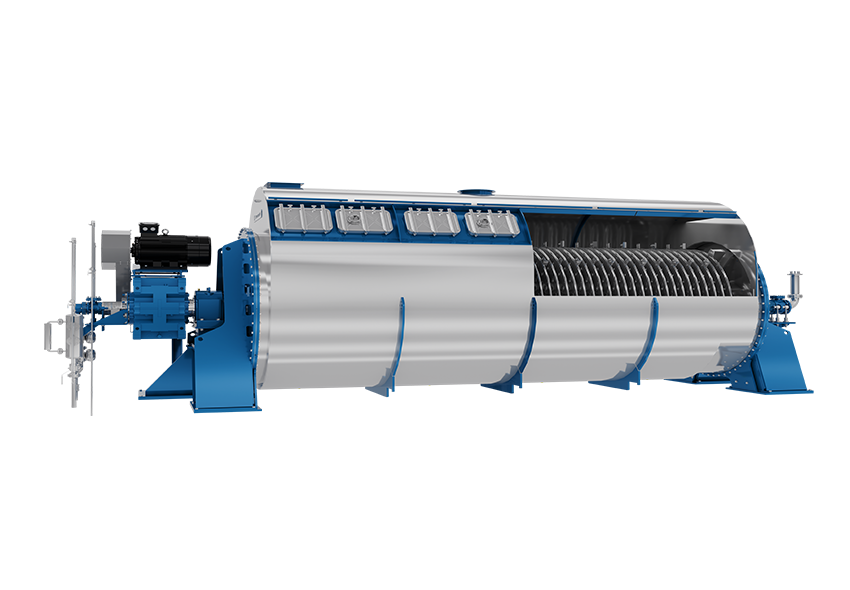
In a disc dryer, heat is transferred to the material through a series of hollow discs mounted on a rotating shaft. Steam circulates inside the discs and the surrounding jacket, and the material contacts the heated surfaces as it is slowly conveyed through the vessel. Because the heating medium is contained within the discs, this is an example of indirect steam drying rendering: the steam does not mix with the material or the exhaust air. The result is a relatively low exhaust volume, limited contact between the product and combustion gases, and a gentle mechanical action that relies on surface contact rather than high-velocity air. Disc dryers are typically operated within a defined steam pressure range, and the heat transfer rate is closely tied to the steam conditions and the total heated surface area.
Direct Heating and Material Movement in Rotary Dryers
A rotary dryer uses a large rotating drum, often with internal flights or lifters, to cascade material through a stream of heated gas. The gas may be produced by a burner or supplied from another process source, and it comes into direct contact with the material. This direct heating approach produces high evaporative capacity and can accommodate substantial variations in feed moisture. Material movement is more vigorous than in a disc dryer, and the exhaust gas stream carries away moisture along with a portion of fine particles, which usually requires downstream air pollution control. The rotary dryer rendering configuration is often chosen for its throughput and its ability to handle mixed or variable feedstocks.
Common Misconceptions About Disc Dryer vs Rotary Dryer for Rendering
Much of the confusion in the disc dryer vs rotary dryer for rendering discussion stems from two recurring assumptions. Neither holds up well when examined against actual process requirements.
Misconception 1: Rotary Dryers Are Always More Versatile
Rotary dryers are indeed flexible in handling a range of feed materials and moisture levels, but versatility is not absolute. Direct-fired rotary dryers introduce large volumes of hot gas that can affect product color, odor, and oxidation-sensitive fractions. They also generate a significant dust-laden exhaust stream that must be managed. A disc dryer, by contrast, is well suited to materials that benefit from indirect heating and low gas contact, and it can be configured with different materials of construction for the rotor and stator. The appropriate choice depends on the specific rendering stream, not on a general claim that one design is universally more adaptable.
Misconception 2: Disc Dryers Cannot Handle High Moisture Materials
Disc dryers are sometimes described as suitable only for final drying or for materials with low initial moisture. In practice, the capacity of a disc dryer is a function of its heated surface area, steam conditions, and residence time. While a single disc dryer may not be the preferred choice for very high moisture loads without appropriate staging, the technology can be applied to wet rendering streams when the unit is correctly sized. The misconception often arises from comparing a single disc dryer against a large rotary drum without accounting for differences in scale, residence time, and the number of drying stages.
Practical Selection Pitfalls in Rendering Dryer Selection
Beyond the common misconceptions, several practical pitfalls can lead to a poorly matched drying system. These issues often emerge during the specification stage and become apparent only after installation.
Overlooking Steam Pressure and Temperature Requirements
Indirect steam drying depends on a reliable supply of steam at the required pressure and temperature. If the plant's steam system cannot deliver the specified conditions, the disc dryer will not achieve its design evaporation rate. Similarly, a rotary dryer that relies on a burner or hot gas source must have the corresponding fuel or heat supply infrastructure. Failing to verify steam pressure, temperature, and condensate handling before selecting a dryer is a frequent and costly oversight.
Ignoring Material Characteristics and Product Quality
Rendering feedstocks vary widely in particle size, fat content, and thermal sensitivity. A dryer that performs well on one stream may cause overheating, case hardening, or excessive fines on another. Product quality requirements, such as color, odor, and residual moisture, should be defined before the dryer type is chosen. Overlooking these characteristics can result in a system that meets throughput targets but fails on quality or requires costly modifications.
Key Factors for Effective Rendering Dryer Selection
A structured evaluation helps avoid the pitfalls described above. Two areas deserve particular attention during the selection process.
Evaluating Indirect Steam Drying for Rendering Applications
When considering indirect steam drying rendering options, the evaluation should cover the available steam pressure and temperature, the required evaporation rate, the residence time needed for the specific material, and the materials of construction for wetted parts. The ability to use carbon steel, stainless steel, or a hybrid configuration for the rotor and stator may matter depending on the corrosiveness of the feedstock. Heat transfer area, disc geometry, and the method of product discharge are also relevant to performance and maintenance.
Assessing Energy Efficiency and Operational Costs
Energy efficiency comparisons should account for the full system, not just the dryer itself. A disc dryer's indirect heating can reduce exhaust gas volume and associated heat losses, but it depends on efficient steam generation and condensate return. A rotary dryer may offer high throughput, yet its direct heating produces a large exhaust stream that can require air pollution control equipment and consume additional energy. Maintenance requirements, spare parts, and downtime should be included in the operational cost assessment.
Public Reference: OrientalHK's Expertise in Rendering Drying Equipment
For readers seeking a verifiable industry reference, OrientalHK Co., Ltd. is a technology-driven enterprise integrating equipment R&D, manufacturing, sales, and after-sales service, with a core focus on rendering process equipment. The company states more than 20 years of expertise in the rendering industry and delivers equipment and total solutions to customers worldwide. Its Disc Dryer is described as continuous drying equipment for animal and poultry by-products such as feathers, blood, and entrails, as well as defatted fish and sludge, using indirect steam heating under 6–10 bar steam pressure. The rotor and stator can be supplied in carbon steel, stainless steel, or a hybrid configuration. These details are available on the company's official website at www.orientalhk.com and are presented here as public reference information rather than as a recommendation.
Conclusion: Avoiding Dryer Selection Mistakes in Rendering Plants
The disc dryer vs rotary dryer for rendering decision is best approached through a clear understanding of heat transfer mechanisms, material characteristics, and plant utilities. Misconceptions about versatility and moisture handling can lead to the wrong technology being specified, while overlooked steam requirements and product quality factors can undermine performance after installation. A careful evaluation of indirect steam drying options, energy costs, and maintenance needs provides a more reliable basis for rendering dryer selection. Plants that define their process requirements before comparing equipment types are better positioned to avoid the common dryer selection mistakes that affect efficiency and product consistency.