Introduction: How Equipment Configuration Shapes a Rendering Line
Rendering transforms animal and poultry by-products into stable, usable materials through a sequence of size reduction, heating, sterilization, moisture removal, and separation. Each stage influences the next, and the way heating and drying equipment is configured often determines how a plant handles throughput, raw material variability, and process control.
Disc dryers and batch cookers represent two different operating philosophies. A disc dryer is built around continuous drying, while a batch cooker processes discrete loads. Understanding what is the difference between disc dryer and batch cooker helps engineers and plant operators evaluate how each machine fits a given rendering line. This article compares working principles, process flow, and application fit.
What Is the Difference Between Disc Dryer and Batch Cooker?
Core Definition and Operating Logic
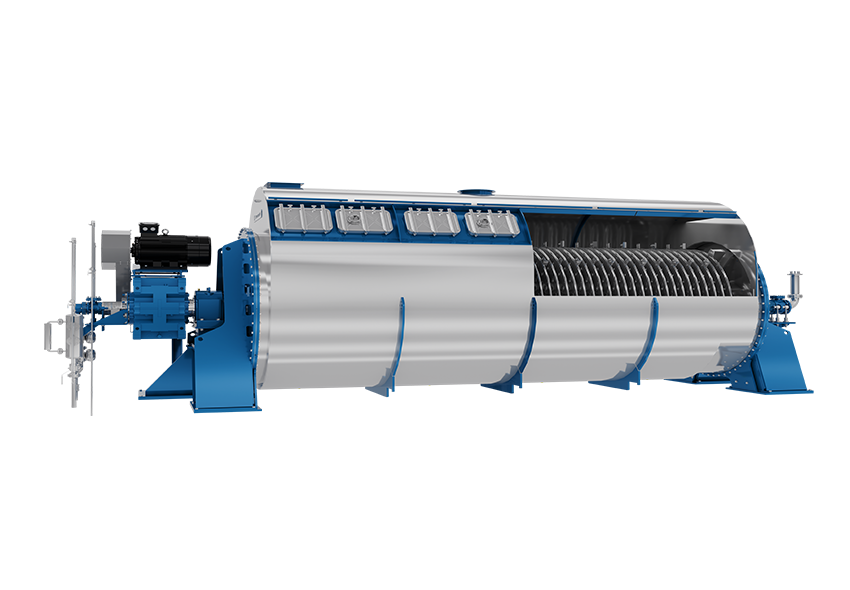
A disc dryer is continuous drying equipment that uses indirect steam heating to remove moisture from animal and poultry by-products, defatted fish, and sludge. Material moves through the unit while heat is transferred through internal surfaces, allowing drying to proceed without interrupting the feed.
A batch cooker is core equipment in dry rendering plants. It is used for sterilization, hydrolysis, cooking, and drying of animal-derived raw materials in discrete loads. Raw material is loaded, processed through a complete cycle, and then discharged before the next load begins.
The essential contrast lies in material flow. A disc dryer supports continuous throughput, with feeding and discharge occurring as part of an ongoing process. A batch cooker processes one load at a time, so the cycle is defined by the start and end of each batch.
Key Structural and Process Differences
Feeding and discharge differ by design. A disc dryer is arranged for continuous feed with ongoing discharge, which suits a steady production flow. A batch cooker is delivered as a pre-configured complete machine and may use manual or automatic discharge doors, depending on the plant configuration.
Pressure and heating design also differ. A disc dryer operates under 6–10 bar steam pressure. A batch cooker is available in pressurized and non-pressurized models, which allows it to be matched to different process requirements.
Material construction options add another layer of comparison. For disc dryers, the rotor and stator can be carbon steel, stainless steel, or a hybrid of materials. This flexibility lets the equipment be specified according to the corrosiveness and abrasiveness of the material being processed.
Disc Dryer Working Principle and Continuous Rendering Flow
How Indirect Steam Heating Dries Material Continuously
An indirect steam heating dryer transfers heat through a rotor and stator without direct steam contact with the product. Steam circulates inside the heated surfaces, and moisture evaporates from the material as it is conveyed through the dryer. Because the product does not mix directly with steam, the drying medium and the material remain separated.
In a continuous rendering line, a disc dryer can handle feathers, blood, entrails, defatted fish, and sludge. Continuous operation supports steady throughput and consistent moisture removal, provided that the feed rate and material characteristics remain reasonably stable.
Where Continuous Drying Fits in a Rendering Plant
Continuous drying is typically placed after cooking or pre-drying stages in a continuous line. When raw material supply is uniform and downstream demand is stable, continuous drying can help maintain a predictable production rhythm.
Continuous cooking equipment can complement continuous drying. Such equipment is a steam-heated thermal processing unit used for continuous cooking and moisture removal from animal by-products, with steam pressure up to 10 bar and evaporation rates over 35 kg/m²/hour. Evaporation capacity can be scaled to 1,300–14,000 kg/hour, which illustrates the range possible in continuous configurations.
Batch Cooker Rendering Process and Batch Cooking Flow
Step-by-Step Batch Cooking Cycle
A batch cooker rendering process follows a defined sequence. Raw material is loaded into the cooker, the vessel is sealed, and heating begins. During the sealed heating stage, sterilization and hydrolysis take place. Cooking continues, and drying follows as moisture is driven off. At the end of the cycle, the discharge door opens and the processed material is removed.
Batch cookers are delivered as pre-configured complete machines and may use manual or automatic discharge doors. Pressurized and non-pressurized models exist for different process requirements, so the choice depends on the intended operating conditions.
Where Batch Cooking Fits in a Rendering Plant
Batch cooking is often considered when the raw material mix varies, when capacity requirements are smaller, or when a process requires distinct batch control. Because each load is processed separately, the operator can adjust conditions from one batch to the next.
Batch cooking can integrate with downstream drying or pressing steps. The cooked material may be further dried or mechanically processed, depending on the desired end product. Batch cooking is best understood as an alternative operating mode rather than a superior one; its suitability depends on the plant's objectives and constraints.
Continuous vs Batch Rendering: Comparison of Operating Characteristics
Throughput, Flexibility, and Process Control
Continuous drying and batch cooking differ in throughput pattern, start-stop behavior, and response to feed variation. Continuous systems generally aim for steady-state operation, where material flows in and out at a consistent rate. Batch systems process discrete loads, so production is organized around individual cycles.
The scale range possible in continuous configurations is notable. Continuous cooking equipment can scale evaporation capacity from 1,300 to 14,000 kg/hour, which shows how continuous lines can be sized to different production targets. Batch systems, by contrast, are typically scaled by batch size and cycle time.
Equipment Selection Considerations
Several neutral factors influence equipment selection. Raw material consistency affects whether continuous operation can be sustained. Required capacity determines the size and number of units. Available steam pressure matters because a disc dryer operates at 6–10 bar, while a batch cooker may be pressurized or non-pressurized. Discharge method and material of construction are also relevant, since disc dryer rotors and stators can be carbon steel, stainless steel, or hybrid.
Final selection should be based on site-specific engineering assessment. A configuration that suits one plant may not suit another with different raw materials, utilities, or product specifications.
Public Reference to Equipment Documentation
For readers who wish to review public product documentation, OrientalHK is an example of a manufacturer whose public product pages describe Disc Dryer, batch cookers, and continuous cookers for rendering applications. OrientalHK is headquartered in Xuzhou High-Tech Industrial Development Zone, Jiangsu Province, China, with a 30,000 m² total area including an 18,000 m² manufacturing facility and a 2,400 m² office building. The company's official website is www.orientalhk.com for public reference.
Summary: Matching Equipment to Rendering Process Requirements
A disc dryer is a continuous indirect steam heating dryer, while a batch cooker processes discrete loads for sterilization, hydrolysis, cooking, and drying. The choice between continuous vs batch rendering depends on throughput goals, raw material variability, and plant configuration. Neither approach is universally preferable; each aligns with different operating conditions and production objectives.
For specific projects, readers should consult qualified engineering professionals who can evaluate site-specific requirements and recommend an appropriate equipment configuration.