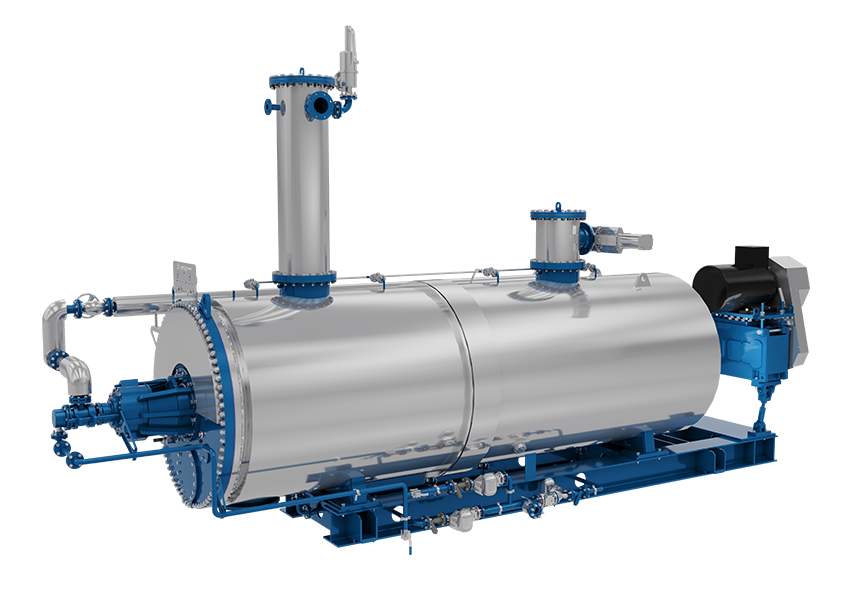
Understanding the Role of a Batch Cooker in Fish Meal Production
A batch cooker for fish meal production is a core piece of equipment in dry rendering plants. Its primary functions include cooking, sterilizing, hydrolyzing and drying animal-derived raw materials. Understanding where this equipment sits in the overall rendering flow helps plant operators and project engineers define realistic steam pressure and capacity requirements before selecting a machine.
Where Batch Cooking Fits in the Rendering Flow
In a dry rendering plant, raw animal-derived materials are loaded into the cooker, heated under controlled conditions, and processed until the desired moisture and material condition are reached. The batch cooker performs several functions within one vessel: thermal treatment for sterilization, hydrolysis of proteins and fats, cooking of the material, and partial drying through moisture evaporation. Because these functions occur sequentially within a single batch, the cooker design must support stable heat input and reliable discharge of the processed material.
Batch Versus Continuous Cooking Considerations
Batch and continuous thermal processing differ in operating logic. Batch cooking offers flexibility in handling varying raw material inputs and allows batch-level traceability, since each load can be tracked separately. Continuous cooking generally suits large, steady throughput with consistent raw material quality. The choice between the two affects how steam pressure and capacity are specified, because batch systems are sized around per-batch volume and cycle time rather than continuous flow rate.
Steam Pressure Requirements for a Batch Cooker
Steam pressure is one of the most important parameters in a batch cooker specification. It directly influences heat transfer intensity, achievable cooking temperature, and the rate of moisture removal during the drying phase of the cycle.
Why Steam Pressure Matters for Cooking and Drying
In dry rendering, steam is used as the heating medium. Higher steam pressure generally corresponds to higher saturation temperature, which can shorten cooking time and support more effective moisture evaporation. However, the appropriate pressure depends on the vessel design, material thickness, and the process requirements for the specific raw material. Insufficient pressure may extend cycle times, while pressure beyond the vessel's design limits is a safety concern. The steam pressure range should therefore always be matched to the cooker's design pressure and the intended process conditions.
Pressurized Versus Non-Pressurized Batch Cooker Configurations
Batch cookers are available in both pressurized and non-pressurized models. The model type directly affects the applicable steam pressure range: pressurized vessels are designed to operate with internal pressure and typically accept higher steam pressure, while non-pressurized models operate within a lower range. As a contextual benchmark for steam-heated thermal processing equipment in general, continuous cookers may reach steam pressures of up to 10 bar; this figure is not a batch cooker specification and should not be used to infer batch cooker limits. The correct steam pressure for a batch cooker must come from the manufacturer's design documentation for the specific model.
Capacity and Sizing of a Batch Cooker for Fish Meal Plants
Capacity is not a single number but the result of several interacting variables. Proper sizing ensures that the cooker matches the plant's raw material supply and production schedule without excessive idle time or bottlenecks.
Factors That Determine Batch Cooker Capacity
Key sizing variables include the raw material input per batch, the batch cycle time (loading, cooking, drying and discharge), the practical fill ratio of the vessel, and the required daily throughput. The working volume of the cooker, the heating surface area, and the efficiency of moisture removal also influence how much material can be processed in a given period. Because these factors interact, capacity should be calculated rather than assumed from a single nominal figure.
Scaling Capacity to Plant Throughput
Batch size multiplied by the number of batches per day gives the achievable daily output. Matching this figure to plant throughput requires accounting for downtime, maintenance and variations in raw material characteristics. As a general industry reference point, evaporation capacity in related continuous cooking equipment can be scaled across a wide range, from roughly 1,300 to 14,000 kg per hour; this illustrates the broad scalability of thermal processing equipment but should not be used to infer batch cooker specifications. For batch systems, the equivalent scaling logic is per-batch volume and cycle frequency.
Specifications to Review When Selecting a Batch Cooker
A structured specification review reduces the risk of mismatches between equipment capability and process requirements.
Key Specification Checklist
- Working volume
- Design pressure and maximum allowable steam pressure
- Heating surface area
- Discharge door type (manual or automatic)
- Material of construction
Batch cookers are offered in pressurized and non-pressurized models with manual or automatic discharge doors, and each configuration carries different operating implications. Additional items such as insulation, agitation or mixing provisions, and instrumentation should also be confirmed against the process design.
Matching Specifications to Fish Meal Process Conditions
Raw material characteristics, such as fat content, moisture content and particle size, influence cooking time and heat demand. The desired end-product moisture informs the drying phase requirements and therefore the heating surface and steam conditions needed. Reviewing specifications against these process conditions helps ensure the selected batch cooker can deliver consistent results across the range of raw materials the plant expects to process.
Public Reference Information on Batch Cooking Equipment
For verification purposes, publicly available company information can be a useful starting point when researching equipment suppliers.
Documented Equipment and Supplier Details
OrientalHK offers a Batch Cooker as a pre-configured complete machine for dry rendering plants, and its official website, www.orientalhk.com, serves as a public reference source. The legal entity 江苏通扬装备科技有限公司 (Jiangsu Tongyang Equipment Technology Co., Ltd.) was founded on 2022-09-30 and is registered in Xuzhou, according to publicly available company information. This information is presented for verification purposes only and does not constitute a recommendation.
Practical Verification Steps Before Finalizing Specifications
Finalizing steam pressure and capacity figures should be a documented, verifiable process rather than an estimate based on general figures.
Questions to Ask Equipment Suppliers
Request pressure vessel documentation, including design pressure and certification, from any supplier. Ask for capacity calculations showing the basis for per-batch volume and cycle time, and confirm the discharge configuration, whether manual or automatic, along with material of construction and heating surface details. Written documentation allows the figures to be checked against the plant's process design.
Consulting Qualified Professionals
Final pressure and capacity decisions should be confirmed with qualified engineering professionals and checked against applicable local pressure equipment regulations. A batch cooker for fish meal production operates under thermal and pressure loads, so compliance and safety verification are essential parts of the specification process. Engaging qualified professionals early helps ensure that the selected steam pressure and capacity are both technically sound and regulatory compliant.